
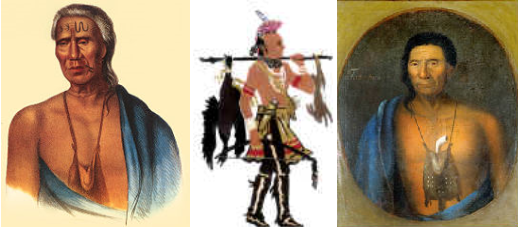
Images of the Lenni Lenape
Grade Level: Elementary
Lesson Creator: Keri C. Orange, Pleasantdale School, West Orange, NJ, and Laura Oliynik, White Rock School, Jefferson Township, NJ
Objectives:
- Students will be able to explain how geography influenced how the Lenni Lenapi lived in New Jersey
- Students will be able to describe the causes and effects relating to why the Lenni Lenape moved away from New Jersey.
New Jersey Student Learning Standards for Social Studies (2020):
- 6.1.5.GeoPP.3: Use geographic models to describe how human movement relates to the location of natural resources and sometimes results in conflict.
- 6.1.5.GeoSV.5: Use geographic data to examine how the search for natural resources resulted in conflict and cooperation among European colonists and Native American resulting in changes to conditions.
- 6.1.5.EconET.3: Explain how scarcity and choice influence decisions made by individuals, communities, and nations.
- 6.1.5.EconEM.4: Compare different regions of New Jersey to determine the role that geography, natural resources, climate, transportation, technology, and/or the labor force play in economic opportunities.
- 6.1.5.HistoryCC.1: Analyze key historical events from the past to explain how they led to the creation of the state of New Jersey and the United States.
- 6.1.5.HistoryCC.6: Use multiple sources to make evidence-based inferences on the impact of European colonization on Native American populations, including the Lenni Lenape of New Jersey.
- 6.1.5.HistoryCC.8: Make evidence-based inferences to describe how the influence of Native American groups, including the Lenni Lenape culture, is manifested in different regions of New Jersey.
- 6.1.5.HistoryUP.2: Compare and contrast forms of governance, belief systems, and family structures among African, European, and Native American groups.
- 6.1.5.HistoryUP.4: Compare and contrast gender roles, religion, values, cultural practices, and political systems of Native American groups.
- 6.1.5.HistoryUP.6: Evaluate the impact of different interpretations of experiences and events by people with different cultural or individual perspectives.
- 6.1.5.HistoryUP.7: Describe why it is important to understand the perspectives of other cultures in an interconnected world.
Common Core ELA Standards:
- RI.4.3 Explain events, procedures, ideas, or concepts in a historical, scientific, or technical text, including what happened and why, based on specific information in the text.
- RI.4.4 Determine the meaning of general academic and domain-specific words or phrases in a text relevant to a grade 4 topic or subject area.
- RI.4.5 Describe the overall structure (e.g., chronology, comparison, cause/effect, problem/solution) of events, ideas, concepts, or information in a text or part of a text.
Common Core ELA Standards:
- RI.4.2 Determine the main idea of a text and explain how it is supported by key details; summarize the text.
- RI.4.3 Explain…ideas or concepts in a historical…text
- RI.4.4 Determine the meaning of general academic and domain-specific words or phrases in a text
- RI.4.7 Interpret information presented visually, orally or quantitatively and explain how the information contributes to an understanding of the text in which it appears.
- RI.4.9 Integrate information from two texts on the same topic in order to write or speak about the subject knowledgeably.
- RI.4.10 Read and comprehend informational texts…
- W.4.2 Write informative/explanatory texts to examine a topic and convey ideas and information clearly
- W.4.4 Produce clear and coherent writing in which the development and organization are appropriate to task, purpose and audience
- W.4.7 Conduct short research project that builds knowledge through investigation of different aspects of a topic
- W.4.9 Draw evidence from …informational texts to support analysis, reflection and research
- SL.4.1 Engage effectively in a range of collaborative discussions (one-on-one…)
- SL.4.2 Paraphrase …information presented in diverse media,…including orally
Essential/Focus questions:
How does geography influence how people live?
- How did Native American of New Jersey and the Northeast region interact with the environment?
- Describe the ways in which Native Americans of the Northeast and Euro-Americans differed in how each group viewed and used the environment.
- How have landforms, climate and weather, and availability of resources impacted where and how people live and work in in New Jersey and the Northeast region?
- How do people make choices about using natural resources? (lumbering, shipbuilding, fishing and whaling, use of water power for textiles, farming, dairy farming)
- How does where people lived in the past influence how those people lived?
- How does where people live today influence how they live and what jobs they might do?
- How does where people live today influence how they live and what job they might do in different areas of the world today?
How and why do people use and change the environment?
- How do people’s choices about how they use natural resources modify the environment?
- How does the type of community you live in (rural, urban, suburban) affect the way you interact with environment (five themes of geography)?
- What are the causes and effects of human movement to New Jersey and the Northeast region?
- How has transportation and innovations changed people’s use of the environment?
- Why is it important to take care of the earth?
- How do physical features of the land affect people and their use of the land?
How has the region changed overtime? What caused those changes?
- How and why have communities in New Jersey and the Northeast region changed over time, and explain the reasons for changes? What was life like for those who lived in the region long ago?
- Describe the influence of the Lenni Lenape culture on different regions of New Jersey.
- What impact did European colonization have on Native American populations, including the Lenni Lenape of New Jersey, and the Northeast regions?
- What are a few turning points in the history of the region? What changed and what was the impact of those changes?
- How did science and technology help to change the region?
- When we retell the past (history), who’s story are we telling?
- What are primary sources and how do we use them to learn about the past/history?
Who are the Lenni Lenape?
Before European colonization, the New Jersey landscape was a mosaic of upland forests and shrublands, freshwater swamps and marshes, coastal plains inhabited by Lenni Lenapi Indians. You may want to have your students watch the Lenapi Lifeways at https://youtu.be/4E01oDW5ssc.
Activity: Archeological Team
To your students: You are a member of an archeology team that has been commissioned by the New Jersey Historic Trust Foundation to find and present information about the Lenni Lenape culture in New Jersey. Your information will be compiled into a magazine and the winning publication will be used in a new travel and tourism brochure for New Jersey! Good Luck with your research. May the best archeological team win!
Each archaeologist is placed into a group and each group will research, design, and create a magazine on The Lenni Lenape Indians. Each member will do research and gather factual information on their assigned topic. As a group, it is your goal to find and share various aspects of the lives of the Lenape Indians during their early days in New Jersey. It is up to your group to select who will research each of the categories about the Lenni Lenape.
Materials: http://www.bigorrin.org/lenape_kids.htm
Process:
- Archaeologists will be assigned to a team/group by the teacher.
- Each group will assign each member of your team one of the four topics to research:
- Food and Clothing: Group member #1 will find information about food and clothing of the tribe.
- Location and Climate: Group member #2 will find information about location and climate of the tribe.
- Housing and Tools: Group member #3 will find information about housing tools of the tribe.
- Rituals and Customs: Group member #4 will find information about rituals and cultures of the tribe.
- Use the resources and links to research information about your assigned topic.
- Take notes about the information you find.
- Each person will complete a graphic organizer with their information. Each person is responsible for writing at least 2 paragraphs that describe the facts that are being presented for their category. You are to include at least 4 facts related to your category. These facts can be handwritten or typed in your own words with correct spelling, grammar and punctuation. Each person will also be responsible for having two pictures or illustrations to accompany their writing.
- Have the groups work together to complete the chart, “Who were the Lenni Lenape? Share and discuss.
- Create a magazine, with each person submitting their information with illustrations
- Each group will give a presentation of their magazine and findings.
What happened to the Lenni Lenape?
Materials:
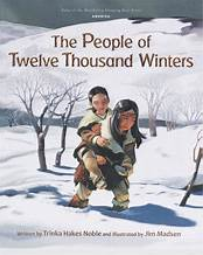
- People of Twelve Thousand Winters by Trinka Noble
- Handout 2: “What Happened to the Lenni Lenape?”
- Handout 3: Glossary
- Dictionary (online or for student groups to look up words together)
- Handout 4: Cause/Effect Chart
Background
For background on the Lenni Lenape in New Jersey, have students read People of Twelve Thousand Winters by Trinka Hakes Noble. The book tells the story of Walking Turtle, a ten-year old Lenni Lenape native living along the Passaic River in northern New Jersey in the 1600s before Europeans settled.
The Lenni Lenape were original people of the mid-Atlantic area (New Jersey, New York, Pennsylvania and Delaware). “Lenni Lenape” was what they called themselves. They were called the “Delaware” tribe by the colonists. The Lenape and other eastern tribes had sided with the French against the English settlers in the French and Indian War. Lenape tribesmen in New Jersey sued for peace, agreeing to give up their land rights provided that the legislature gave them a settlement area. In 1758, the British colonials and the chiefs of 13 Native American nations, representing the Iroquois, Lenape (Delaware) and Shawnee tribes signed the Treaty of Easton of 1758. The tribes agreed not to support the French in the colonial conflict and to leave their eastern lands in exchange for a British promise to stop incursions into Indian territory west of the Alleghenies.
Many Lenape natives were driven out of their homeland by the British. While some chose to leave New Jersey, a few who had converted to Christianity stayed.
Brotherton
During the French and Indian War, the Lenni-Lenape (or Delaware) Indians of New Jersey were among the tribes that signed the Treaty of Easton of 1758. The tribes agreed not to support the French in the colonial conflict and to leave their eastern lands in exchange for a British promise to stop incursions into Indian territory west of the Alleghenies. While many Lenapes chose to leave New Jersey, a few who had converted to Christianity stayed.
New Jersey set aside its first Indian reservation, known as "Brotherton," near present-day Indian Mills in Burlington County. Presbyterian minister and missionary Reverend John Brainerd joined the community, which he called “Brotherton” for the brotherhood he hoped it would engender. Approximately 200 Native Americans settled at Brotherton and established a community around grist- and sawmills.
The reservation never became self-sufficient, and after Brainerd left in 1777, circumstances became increasingly difficult. Most of the Lenape left to join the Oneida in upstate New York in 1802, after selling their Indian Mills property back to the state. A few Lenape stayed in New Jersey, mostly assimilating with their white and African American neighbors. Ultimately, what happened to them?
Where did the Lenni Lenape go?
Handout 2 shows a partial map of the forced travels of the Lenape Indians. The Lenape, like other Native tribes, were relocated to Oklahoma, where there are two federally recognized Lenape tribes: the Delaware Tribe of Indians and the Delaware Tribe of Western Oklahoma. There are also some small Lenape communities remaining in New Jersey and Pennsylvania. The total Lenape population is around 16,000.
- Distribute the “What Happened to the Lenni Lenape?” handout.
- Have students examine the map (Handout 2) and answer the question about how the arrows are moving.
- Before reading the rest of the worksheet, define the glossary words together and have students take short notes for the definitions (Handout 3).
- Read the worksheet together as a class or have the students read in small groups.
- Have students discuss their thoughts about the fairness of the situation.
- After the class discussion, have students complete Handout 4, the Cause/Effect chart.
- Where are the Lenni Lenape today?
There are two federally recognized Lenape tribes in Oklahoma: the Delaware Tribe of Indians and the Delaware Tribe of Western Oklahoma. Like most Native American tribes, the Delaware Indian tribes are autonomous. That means each tribe has its own government, laws, police, and services, just like a small country. However, the Delawares are also United States citizens and must obey American law.
Assessment:
Student participation in class discussion and apply knowledge from the reading to the Cause/Effect chart.
What about the Lenni Lenape still in New Jersey?
The Nanticoke Lenape are a tribal confederation of Nanticoke of the Delmarva Peninsula and the Lenape of southern New Jersey and northern Delaware. They are recognized by the state of New Jersey, having reorganized and maintained elected governments since the 1970s. However, they are not a federally recognized tribe. The tribe is made up of descendants of Algonquian-speaking Nanticoke and Lenape who remained in, or returned to, their ancient homeland at the Delaware Bay. Many of their relatives suffered removals and forced migrations to the central United States and Canada. The Nanticoke and Lenni-Lenape peoples were among the first in what is now the United States to resist European encroachment upon their lands, among the first to sign treaties in an attempt to create a peaceful co-existence, and among the first to be forced onto reservations on the Delmarva Peninsula and in New Jersey. The tribe's current headquarters is in Bridgeton, NJ.
The Ramapough (also spelled Ramapo) Indians or Ramapo Mountain people, are a group of approximately 5,000 people living in and around the Ramapo Mountains of Bergen and Passaic counties in northern New Jersey and Rockland County in southern New York, about 25 miles from New York City. They were recognized in 1980 by the state of New Jersey as the Ramapough Lenape Nation but are not recognized federally. The Ramapough Lenape Indian Nation descends largely from the Lenape, but also absorbed people with varying degrees of Tuscarora, African, and Dutch and other European ancestry.
The Powhatan Renape Nation was also recognized by the State of New Jersey in 1980 but is not recognized by the federal government. The Powhatan had been a large nation in the Northeastern area, primarily Virginia, at the time of colonization. Today, only a smattering remain. The state leases a portion of Rancocas State Park, near Mt. Holly in Burlington County, to the Powhatan Renape (See (https://www.cbsnews.com/philadelphia/video/native-american-group-starts-to-reclaim-land-that-once-belonged-to-ancestors-in-nj).
New Jersey created a Commission on American Indian Affairs in 1995 to ensure that American Indian tribal members and communities have full opportunities for their own cultural, educational, social and economic welfare, and to promote understanding about the history and culture of the American Indian communities in the state (See https://nj.gov/state/njcaia.shtml). The Ramapough Lenape Nation, the Nanticoke Lenni-Lenape Tribal Nation, and the Powhatan Renape Nation have a history of working togethers
What is the lasting influence of the Lenni Lenape in New Jersey?
Have students consider this question. Many will answer the names of places. Have students list the names of rivers and towns in New Jersey based on Lenape language. For example: Allamuchy, Batsto, Communipaw, Cohasey, Hackensack, Hoboken, Ho-Ho-Kus, Lopatcong, Mahwah, Metuchen, Passaic, Piscataway, Raritan, Rahway, Ramapo, Secaucus, Sahmong, Succasunna, Totowa, Wanaque, Weehawken, Weequahic, Wyckoff. For full list, see “List of New Jersey placenames of Native American origin” in Wikipedia.
In addition to names of towns and rivers, foot trails used by the Lenni Lenape became colonial roads, and after several centuries, major highways across New Jersey.
Extension
Visit the replica of a Powhatan Indian village from the 1600s in Rancocas State Park (https://www.stateparks.com/rancocas_state_park_in_new_jersey.html) or Winakung, a native woodland forest with exhibits and hands-on activities about wilderness skills, woodland resources, forest food, and Lenape village at Waterloo Village in Sussex County (https://www.nj.gov/dep/parksandforests/historic/waterloovillage.html).
Handout 1: Who are the Lenni Lenape?
| Category | Facts |
| Food and Clothing | |
| Location and Climate | |
| Housing and Tools | |
| Rituals and Customs |
Handout 2: Where did the Lenni Lenape from New Jersey go?

Directions: Study the map. Describe the direction that the arrows are moving on the map.
When the colonists came to America from Europe, they brought diseases with them that the Lenni Lenape couldn’t recover from. Many died from diseases. The Lenni Lenape that survived eventually had more and more land taken away from them as more colonists came to America.
Today, many Lenni Lenape live on the reservations in Oklahoma.
Some stayed in Pennsylvania, but have married into other cultures. These ancestors hid their Native American culture to protect their children from persecution, and at times, death.
In Native American culture, it was important to make decisions that would keep their future generations safe. They cut their hair, spoke English, went to school, changed their religion, and changed who they were.
Only in recent times has it been possible for descendents of those ancestors to begin to practice their religion and culture again. Many children with Native American heritage have to learn about their culture since so much time has passed and a lot has been forgotten.
Throughout history, Native Americans have changed or hid their culture to keep their children safe from persecution. Because of this, many say, "There are no Indians here in the East." The truth is, there are still some Native Americans here and they have begun to relearn their heritage.
Handout 3: Glossary
ancestors-____________________________________________________________________
autonomous-__________________________________________________________________
descendents-__________________________________________________________________
generations-__________________________________________________________________
heritage-____________________________________________________________________
persecution-__________________________________________________________________
reservations- _________________________________________________________________
Information from: http://www.anthro4n6.net/lenape/#Today
Handout 4: Causes and Effects
Name:__________________________________ Date:___________________________
Directions: Use what you learned from the reading and class discussion to fill in the blank causes and effects on the chart below.
| Cause | Effect |
|
The European colonists brought diseases to America that the Lenni Lenape couldn’t fight. |
____________________________________ ____________________________________ ____________________________________ |
|
____________________________________ ____________________________________ ____________________________________ |
The Lenni Lenape moved off of their land and moved north to Canada, or west to Pennsylvania and Oklahoma. |
|
The Lenni Lenape were persecuted by the colonists because of their culture, and they did not feel safe. |
____________________________________ ____________________________________ ____________________________________ |
|
The Lenni Lenape cut their hair, spoke English, went to school, changed their religion, and changed who they were. |
____________________________________ ____________________________________ ____________________________________ |
|
____________________________________ ____________________________________ ____________________________________ |
Today, descendants of the Lenni Lenape have begun to re-learn their culture. |