
Lesson creator: The New Jersey Center for Civic Education, Rutgers University, Piscataway, NJ
Grade level: Elementary
Objectives: Students will be able to:
- Explain changes in societal attitudes towards the role of women
- Analyze and evaluate how New Jersey women have contributed to the improvement of society
New Jersey Student Learning Standards for Social Studies (2020):
6.1.5.CivicsPI.1: Describe ways in which people benefit from and are challenged by working together, including through government, workplaces, voluntary organizations, and families.
6.1.5.CivicsPD.2: Explain how individuals can initiate and/or influence local, state, or national public policymaking (e.g., petitions, proposing laws, contacting elected officials).
6.1.5.Civic.DP.1: Using evidence, explain how the core civic virtues and democratic principles impact the decisions made at the local, state, and national government (e.g., fairness, equality, common good).
6.1.5.CivicsDP.2: Compare and contrast responses of individuals and groups, past and present, to violations of fundamental rights (e.g., fairness, civil rights, human rights).
6.1.5.CivicsCM.1: Use a variety of sources to describe the characteristics exhibited by real and fictional people that contribute(d) to the well-being of their community and country.
6.1.5.CivicsCM.5: Investigate the lives of New Jersey individuals with diverse experiences who have contributed to the improvement of society.
6.1.5.HistoryCC.9: Evaluate the impact of ideas, inventions, and other contributions of prominent figures who lived in New Jersey.
6.1.5.HistoryCA.1: Craft an argument, supported with historical evidence, for how factors such as demographics (e.g., race, gender, religion, and economic status) affected social, economic, and political opportunities during the Colonial era.
Essential Questions:
- How have attitudes about women changed?
- How have New Jersey women contributed to the improvement of society?
- How have individuals or groups taken actions to promote the dignity and rights of people?
- How does understanding multiple perspectives help us to make more informed decisions?
- How have events of the past shaped the present?
Procedures/Activities:
Brainstorming Activity. Brainstorm women’s responsibilities through United States history, from colonial times to today. Teachers may use paintings or photos to help students formulate their ideas. Responses may include cooking, cleaning, shopping, taking care of children, nursing, educating children, etc. During the colonial period, the country was primarily agricultural and women worked on the farms alongside men, feeding animals, growing food, making clothing (weaving and sewing) in addition to taking care of the house and children. During the American Revolution, women maintained the farm and the home and children as well as protecting their family, supporting the troops and nursing injured soldiers. As the market economy grew and women no longer made everything for themselves at home, opportunities to work outside the home grew and many women, especially young women and even young girls, supported their family’s income by working in factories, particularly textile factories, weaving and sewing with machines, as well as teaching in schools and working in offices. Follow this activity with a discussion question: In an “information” society with instant communication, how has the role of women changed?
Timeline of New Jersey Women Chart: Share Handout 1 with your students. Have them place the women on a timeline. They may draw representations of the various women, or use symbols, or use images to indicate each woman. Also, have students indicate the overlapping timeframes of some of the lives of some of the women listed. When the the timeline is complete, deepen the students understanding with the following discussion questions;
- Which two 19th century women lived almost contemporaneous lives? (Harriet Tubman and Clara Barton). How were their lives alike? (E.g - They both helped people in need) How were they different? (Answers could relate to race, status, conditions, etc.) Though they lived contemporaneous lives, were there more similarities or differences? What explains that?.
- What trend do you see on the chart?
- There were many New Jersey women born around the turn of the twentieth century who did exceptional things as they grew into adulthood. Why do you think that happened?
Critical thinking activity: Divide students into small groups. Have each group read and become familiar with one of the ten New Jersey women showcased in the lesson. Then have each group share what they learned with the rest of the class. Use the following questions to guide their answers.
- Who is your New Jersey woman? When did she live? What was her connection to New Jersey?
- How did she contribute to society? In your opinion, what was her greatest contribution?
- What were her greatest characteristics? (Teachers may want to provide a list of positive characteristics.)
- Can you picture yourself doing what she did? Why or why not?
- How may you have helped her with her cause?
- How was her life similar or different to the lives of women today? Alternate activity: the teacher may read the background to the full class. Then the teachers can guide discussion with the full class using the same questions.
Design and Presentation of an Award: In small groups of students choose one woman who they feel deserves an Award for Excellent Service to their community. Option 1: Students may use Handout 2: Certificate of Excellence for their award. Have students consider the following suggestions for their Certificate of Excellence:
- On the line under “We hereby present” students write the woman’s name.
- On the line in the middle section of the certificate, students should write WHY this woman deserves the Award of Excellent Service to the Community, explaining in complete sentences specific things she has accomplished.
- On the line after “Awarded on this” students insert the day, month and year.
- The “sponsoring” student or group of students signs the bottom of the certificate.
- If time allows, students may decorate the certificate with a ribbon before presenting it to the class. Option 2: Students may design their own special award. Have students consider the characteristics of the woman and symbolism of her achievement in their design. Finally, have students consider and plan their presentation ceremony. Do they want to have a posthumous ceremony, honoring the person after their death; or do they want to role-play a ceremony that honors the woman while she was alive. For either ceremony, encourage all students to contribute in a significant way to the design of the award and/or to the planning and presentation of the ceremony.
Historical Background:
1. Annis Boudinot Stockton
Born in 1736, Annis Boudinot married Richard Stockton, an attorney from an elite Princeton, New Jersey family. Annis was one of the first women to be published in the Thirteen Colonies. She wrote and published her poems in leading newspapers and magazines of the day and was part of a Mid-Atlantic writing circle. She was the author of more than 120 works, but it was not until 1985, when a manuscript copybook long held privately was given to the New Jersey Historical Society, that most of her works became known. Before that, she was known to have written 40 poems. Annis became known as the "Duchess of Morven", the name of the Stockton estate in Princeton, New Jersey. They entertained prominent guests, including George Washington, with whom she had a correspondence, including numerous poems. She died in 1801.

Portrait of Annis Boudinot Stockton
For additional information see, Annis Boudinot Stockton | George Washington's Mount Vernon); or read My Story: Annis Boudinot Stockton, November 1776 – njcssjournal
2. Molly Pitcher
“Molly Pitcher” was a nickname given to a woman said to have fought in the American Revolutionary War Battle of Monmouth. The name itself may have originated as a nickname given to women who carried pitchers and buckets of water to men on the battlefield during the war. It is generally believed that the woman at the Battle of Monmouth was Mary Ludwig Hays McCauley.
Mary Ludwig was born in 1754, on a farm near Trenton, New Jersey. In 1768, she moved to Carlisle, Pennsylvania, where she met William (also known as John) Hays, a local barber. They married the following year. At the Battle of Monmouth on June 28, 1778, Mary Hays spent much of the early day carrying water to soldiers and artillerymen, often under heavy fire from British troops. The weather was hot, over 100 degrees. Sometime during the battle, William Hays collapsed, either wounded or suffering from heat exhaustion. As her husband was carried off the battlefield, Mary Hays took his place at the cannon. For the rest of the day, in the heat of battle, Mary continued to "swab and load" the cannon using her husband's ramrod. At one point, a British musket ball or cannonball flew between her legs and tore off the bottom of her skirt. Mary supposedly said something to the effect of, "Well, that could have been worse," and went back to loading the cannon. Mary Ludwig Hays McCauley died in 1832.
For additional information, watch the 90-second video about Molly Pitcher at http://youtu.be/QfS7FPP4bNg; or read, Molly Pitcher | American Battlefield Trust)
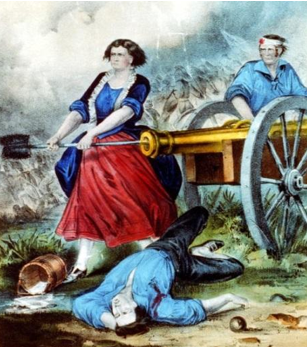
Molly Pitcher at the Battle of Monmouth, Currier and Ives lithograph, Library of Congress
Extension activity: What other roles did New Jersey women play during the American Revolution? Other women helped as spies (Patience Lovell Wright), nurses (Ann Cooper Whitall), and providing housing for soldiers (Theodosia Ford). For more information, go to Meet Your Revolutionary Neighbors at Meet Your Revolutionary Neighbors - Crossroads of the American Revolution.
3. Harriet Tubman
Harriet Tubman was the most famous conductor of the Underground Railroad. Born into slavery around 1820 in Dorchester County, Maryland, Tubman escaped and fled to Pennsylvania in 1849. She worked summers in Cape May, NJ and returned to Maryland and rescued members of her family and others. She made 19 trips into the South and, over a period of ten years, conducted approximately 300 people to freedom in the North across New Jersey to New York City or to Canada, without ever losing any of her charges.
Her formula for success was quite simple: although she frequently changed her routes leading to the North, Ms. Tubman always began the escapes on Saturday nights. This was significant for two reasons. First, slaves were often not required to work on Sunday. Therefore, their owners might not notice their absence until Monday morning. Secondly, newspapers would not be able to report runaway slaves until the beginning of the week. These two facts often gave Tubman and the escapees enough time to get a head start to their destination in the free states. During the Civil War Tubman worked for the Union as a cook, a nurse, and even a spy. After the war she settled in Auburn, New York, where she would spend the rest of her long life. She died in 1913.
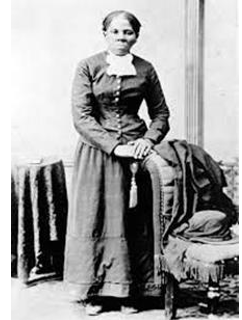
Harriet Tubman
For additional information watch The Life of Harriet Tubman for Kids | Learn facts about Harriet Tubman | Black History Month or read a short biography at Harriet Tubman
4. Abigail Goodwin
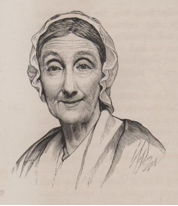
Abigail Goodwin
Less well-known than Harriet Tubman, Abigail Goodwin was responsible for helping hundreds if not thousands of slaves find freedom in the north through the Underground Railroad in New Jersey. Abigail Goodwin (1793-1867) was the daughter of a Quaker farmer in Salem, New Jersey, who had freed his slaves during the American Revolution. She and her sister, Elizabeth, were fervent abolitionists. Abigail was thrown out of the Orthodox Quaker Meeting in Salem for joining a group of radical Quakers fighting for the total abolition of slavery.
Amy Reckless, a slave for one of Salem County’s wealthiest families, first set herself free then returned to Salem. Reckless partnered with the Goodwin sisters in collecting goods and financial contributions to help fugitive slaves escape. By the 1830s, Abigail had emerged as an active figure in the Underground Railroad movement and the Goodwin home became a key station on the Underground Railroad. She often raised money and sent it to abolitionists to purchase slaves in the Carolinas and free them. She provided lodging, food, clothing and money to the fugitives who came to her home to continue their journey.
Due in part to her efforts many slaves living in Delaware, Maryland, and Virginia were aware of this region as a safe haven for runaways. Abigail Goodwin devoted her life to helping runaway slaves and encouraging the end of slavery and she has been noted as one of the most important Underground Railroad agents.
For more information about Abigail Goodwin go to Abigail Goodwin, Quaker Abolitionist | Salem County Cultural & Heritage Commission
5. Clara Barton
Clarissa "Clara" Barton was born in 1821 in Massachusetts. She became an educator in 1838. Barton became interested in providing a good education for all children in the community while visiting a friend in Bordentown, NJ. Although laws existed in New Jersey for free public education, they were never implemented. There were private schools for the wealthy and pauper schools for others. Barton started the nation’s first free public school in Bordentown in 1852 with six children and a one-room school house. By the following year, there were over 600 children in the program, receiving lessons from teachers housed in locations all over the city.
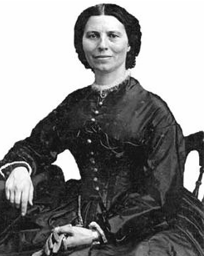
Clara Barton, c. 1866
Clarissa "Clara" Barton was born in 1821 in Massachusetts. She became an educator in 1838. Barton became interested in providing a good education for all children in the community while visiting a friend in Bordentown, NJ. Although laws existed in New Jersey for free public education, they were never implemented. There were private schools for the wealthy and pauper schools for others. Barton started the nation’s first free public school in Bordentown in 1852 with six children and a one-room school house. By the following year, there were over 600 children in the program, receiving lessons from teachers housed in locations all over the city.
In 1855, Barton moved to Washington D.C. and began work as a clerk in the U.S. Patent Office. This was the first time a woman had received a substantial clerkship in the federal government and at a salary equal to a man's salary. Subsequently, under political opposition to women working in government offices, her position was reduced to that of copyist, and then eliminated entirely. At a time when relatively few women worked outside the home, Barton never married and built a career helping others. With the outbreak of the Civil War, Barton set up a system of procurement getting food and comfort to both sides of the conflict. In 1864 she was appointed by the Union as “lady in charge" of the hospitals at the front along the James River in Virginia. She became known as the "Angel of the Battlefield."
After the war, Barton ran the Office of Missing Soldiers and created a network to help families find and reunite with their loved ones. As the war ended, she helped locate thousands of missing soldiers, including identifying the dead at Andersonville prison in Georgia. Barton lobbied for U.S. recognition of the International Committee of the Red Cross, and became president of the American branch when it was founded in 1881. Barton continued her humanitarian work throughout several foreign wars and domestic crises before her death in 1912.
For additional information, visit Clara Barton Biography; or watch a short video at Clara Barton - Famous Nurse | Mini Bio | BIO
6. Elizabeth White
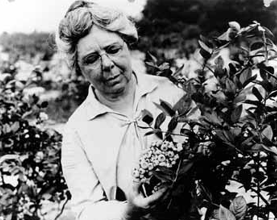
Elizabeth White
Elizabeth Coleman White (1871-1954) grew up on her father's cranberry farm in Whitesbog, an agricultural community in the Pine Barrens in Pemberton Township, New Jersey. Whitesbog was the largest cranberry farm in the state and its founder (her father) was a nationally recognized leader in the cranberry industry. At the time, people did not believe that blueberries could be domesticated. In 1911, Elizabeth White became interested in blueberry propagation and, using her father's farm, she collaborated with Dr. Frederick Coville, a U.S. Department of Agriculture botanist, to identify wild blueberry plants with the most desirable properties, crossbreed the bushes and create vibrant new blueberry varieties based on wild varieties. By 1916, they had developed blueberry plants that could be grown and sold commercially. In 1927, she helped to start the New Jersey Cooperative Blueberry Association. Thanks to Elizabeth White, blueberries are now produced in 38 states, with only Michigan producing more than in New Jersey!
For additional information on Elizabeth White, see Elizabeth Coleman White - New Jersey Women's History; or read and view video at Elizabeth Coleman White – New Jersey Hall of Fame.
7. Alice Paul
Alice Paul was born in 1885 to a Quaker family. Her father was a successful businessman and the family lived at Paulsdale, a 173-acre farm in Mt. Laurel, New Jersey. Her Quaker family supported gender equality and the need to work for the betterment of society. Alice Paul graduated from Swarthmore College and was the commencement speaker. She worked in the settlement movement in New York and went to study social work in England, where she met radical suffragettes, who used public action and protests to bring attention to the secondary status of women. Paul soon joined the movement and was arrested several times.
She returned to the U.S. and joined with Lucy Burns to work for the passage of a constitutional amendment ensuring women’s right to vote in the United States. They organized a publicity event—a parade of several thousand women in Washington, D.C., in March 1913, the day before Woodrow Wilson’s inauguration. Although planned as an elegant progression of symbolically dressed, accomplished, and professional women, the parade quickly devolved into a riot. Paul used this event to rally public opinion to the women's cause. In 1916, Paul stood with other radical suffragists outside the White House holding banners demanding the right to vote and criticizing President Wilson.
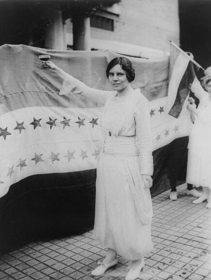
Alice Paul, 1920 LC USZ262-20176
After the U.S. entered World War I in 1917, the picketers began to be arrested and sent to a Workhouse in Virginia. They staged hunger strikes and were beaten and force fed. The growing public support for the women led President Wilson to endorse a Constitutional Amendment to grant women the right to vote in 1917 and the Nineteenth Amendment, which gave the right to vote to women in the United States, was passed in 1919 and became law the following year, thanks to Alice Paul and her fearless colleagues. Paul died in 1977.
For additional information, see the 90-second video about Alice Paul at Alice Paul, Women's Rights Activist; or read at Dr. Alice Paul (U.S. National Park Service)
8. Mary Roebling
Mary Gindhart was born in West Collingswood, New Jersey on July 29, 1905. In 1921, at the age of sixteen, Mary married a young soldier and musician named Arthur Herbert. They had a daughter but Arthur died of blood poisoning in 1924. After the death of her husband, Mary moved in with her parents and became a secretary in a Philadelphia brokerage house while taking night classes in business administration and merchandising at the University of Pennsylvania. At the brokerage house, she met Siegfried Roebling who ran one of the family's businesses, the Trenton Trust Company. They married in 1931 and had a son before tragedy befell Mary and her second husband died in 1936.
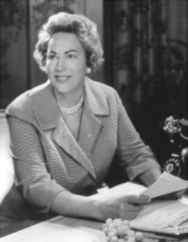
Mary G. Roebling, 1964
Mary Roebling inherited Trenton Trust stock from her husband and assumed his seat on the Trenton Trust Company board. She was elected president of the board on January 21, 1937, becoming the first woman to serve as president of a major American bank. Roebling established innovative practices of public relations and merchandising, as well as drive-in banking and a railroad station branch for Trenton commuters. Under her leadership, Trenton Trust's assets increased from 17 to 137 million in a twenty-eight year period. She served on the board until 1972 when the bank merged with National State and then chaired the combined banks until 1984. Roebling also served as the first female governor of the American Stock Exchange from 1958-1962..
Throughout her life, Mary Roebling was a strong supporter of equal rights for women. Her goal was "equal pay for equal work with equal opportunity for advancement." The promotion of women in business was extremely important to her. She felt that companies were not using women to their fullest advantage, and that women were concentrated in lower-echelon jobs and paid accordingly. She died on October 25, 1994 at her home in Trenton, NJ.
For additional information see and view video at mary-roebling; or read mary-herbert-roebling.
9. Anne Morrow Lindbergh
Writer and aviation pioneer, Anne Morrow was born in 1906 in Englewood, NJ. In 1929 she married famed aviator Charles Lindbergh and much of the early years of their marriage was spent flying. In 1931 they journeyed in a single-engine plane over Canada and Alaska, and on to Japan and China. The flight was the inspiration for Morrow Lindbergh's first book, "North to the Orient." In 1934, the National Geographic Society awarded her its Hubbard Gold Medal for her accomplishment of 40,000 miles of exploration flying over five continents with her husband. In addition, she was awarded the Cross of Honor of the U.S. Flag Association in recognition of her successes in surveying transatlantic air routes. She was also the first licensed female glider pilot in the United States.
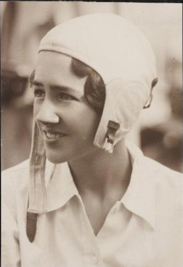
Anne Morrow Lindbergh
Anne Morrow Lindbergh was an acclaimed author whose books and articles spanned the genres of poetry to non-fiction, touching upon topics as diverse as youth and age; love and marriage; peace, solitude and contentment, as well as the role of women in the 20th century. Her 1956 book, Gifts from the Sea, presented eight inspirational essays concerning the meaning of a woman's life and was on the best seller list for months. She died in 2001.
For additional information see and view video at Anne Morrow Lindbergh – New Jersey Hall of Fame; or read at Anne Morrow Lindbergh | American Experience | Official Site | PBS
10. Virginia Apgar
Virginia Apgar was born in 1909 in Westfield, NJ, where she was raised. She graduated from Mount Holyoke College, where she studied zoology with minors in physiology and chemistry, and from the Columbia University College of Physicians in 1933. In 1949, Apgar became the first woman to become a full professor at the Columbia University’s medical college, where she did clinical and research work. In 1953, she introduced the first test, called the Apgar score, to assess the health of newborn babies. The Apgar score is calculated based on an infant's condition at one minute and five minutes after birth.
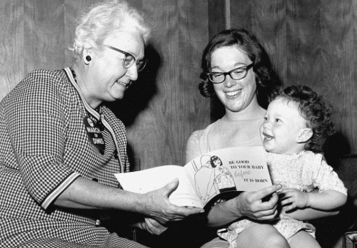
As part of the March of Dimes campaign to prevent birth defects, Dr. Apgar advises mother to “Be Good to Your Baby before It is Born;” c. 1986
In 1959, Apgar left Columbia and earned a Master of Public Health degree from Johns Hopkins University. Also starting in 1959 until her death in 1974, Apgar worked for the March of Dimes Foundation, serving as vice president for Medical Affairs and directing its research program to prevent and treat birth defects. Because gestational age is directly related to an infant’s Apgar score, Apgar was one of the first at the March of Dimes to bring attention to the problem of premature birth, now one of the March of Dimes top priorities. During this time, she wrote and lectured extensively, authoring articles in popular magazines as well as research work.
For additional information, see Virginia Apgar | National Women's History Museum or Apgar, Virginia | Women of the Hall
11. Millicent Fenwick
Millicent Hammond was born in New York City, on February 25, 1910. Her father, Ogden Haggerty Hammond, was a wealthy financier and New Jersey state legislator; her mother, Mary Picton Stevens Hammond, died aboard the U.S.S. Lusitania in 1915. Millicent accompanied her father to Madrid when President Calvin Coolidge appointed him U.S. Ambassador to Spain. She attended Columbia University and later studied at the New School for Social Research. In 1934, she married businessman Hugh Fenwick, and they raised two children. After the Fenwicks divorced in 1945, she modeled briefly for Harper’s Bazaar and then took a job as associate editor on the staff of Condé Nast’s Vogue magazine. In 1948, she wrote Vogue’s Book of Etiquette, a 600–page “treatise on proper behavior,” which sold more than a million copies. Fenwick left Vogue in 1952 and inherited a fortune when her father passed away a few years later.
Fenwick joined the National Conference of Christians and Jews in an attempt to counter anti–Semitic propaganda in the United States after Hitler came to power in Germany in the 1930s and the National Association for the Advancement of Colored People in 1946. She served on the Bernardsville, New Jersey, board of education; and then as a member of the Bernardsville borough council. Her first campaign for state office was in 1970 when she won a seat in the New Jersey State Assembly at the age of 59. Fenwick served several years in the State Assembly before New Jersey Governor William Cahill appointed her the state’s first director of consumer affairs.
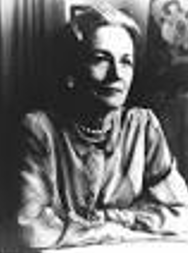
Congresswoman Millicent Fenwick
Elected to Congress in 1974, Millicent Fenwick was an outspoken patrician who served four terms; earned the epithet “Conscience of Congress” with her fiscal conservatism, human rights advocacy, and dedication to campaign finance reform. Fenwick’s blueblood mannerisms, which were inspiration for a popular comic strip character, belied her lifelong commitment to liberal activism on behalf of consumers, racial minorities, and women’s rights. Although she was a fiscal conservative, Fenwick supported liberal social issues, such as equal rights, food stamps, abortion, and human rights. Fenwick retired in 1987 and died in 1992.
For additional information watch Millicent Fenwick; or read and view video at NJ Hall of Fame.
Assessment
Students individually write short essays or groups of students work together to orally present an analysis of how one or more New Jersey women had contributed to the improvement of society.
Alternatively, students write or orally report on how the role of women has changed over time.
Additional Resources
For information about these and other New Jersey women go to New Jersey Women's History
Extension
1. Use materials from the Council for Economic Education’s EconEdLink website EconEdLink to:
- Understand that people earn income by exchanging their human resources (physical or mental work) for wages or salaries.
- Explore the education and training requirements for various careers.
- Evaluate interest in various careers.
2. The homes of many of New Jersey’s celebrated women have been maintained as historic sites and may be visited for additional understanding. Take a field trip to one or more of the following:
- Morven. Originally part of a 5,500-acre tract purchased from William Penn in 1701 by the Stockton family, it became the home of Richard and Annis Stockton. Located at 55 Stockton Street, in Princeton, the building has been designated as a National Historic Landmark. From 1944 to 1981 it was the official residence of New Jersey’s Governor. Since then, it has become a museum and garden. See Morven Museum & Garden
- Monmouth Battlefield Park. This was the site of one of the largest battles of the American Revolution, where Molly Pitcher filled the spot of her fallen husband. The battle ended in a standoff. Each year the Friends of Monmouth Battlefield co-sponsors, with the NJ Department of Environmental Protection, an annual reenactment of the battle. The event is usually held on a weekend at the end of June, in commemoration of the anniversary of the battle being fought on June 28, 1778. See Monmouth Battlefield State Park - State Parks, Forests & Historic Sites
- The Goodwin Sisters House was the first site in New Jersey accepted into the National Park Service’s National Underground Railroad Network to Freedom Program. It is privately owned by a direct descendent of the Goodwin family and not regularly open to the public. However, the house is a site on the New Jersey Women’s Heritage Trail. See Abigail Goodwin, Quaker Abolitionist | Salem County Cultural & Heritage Commission
- Whitesbog includes the village and the surrounding 3,000 acres of cranberry bogs, blueberry fields, reservoirs, sugar sand roads and Pine Barren’s forests. It is listed on both the National and State Registers of Historic Sites. Whitesbog Village’s grounds are open 365 days a year as part of the Brendan T. Byrne State Forest. The Village buildings are only opened for scheduled events, pre-arranged tours and by special request. See Whitesbog Preservation Trust
- Paulsdale, in Mt. Laurel, NJ, is the home of Alice Paul. The house has been restored to the condition when Paul lived there. It now serves as a historic house museum and a home for the Alice Paul Institute. Visit – Alice Paul Center for Gender Justice
- The New Jersey Women’s Heritage Trail will lead you to the historic places that tell the collective story of a few of these famous women, and many of the more private women, who contributed to the agricultural, industrial, labor and domestic history of the state. Although women have always comprised over half of the state’s population, the tales of women’s contributions to New Jersey history often have been omitted from our telling of history. The Heritage Trail brings to life the vital role of women in New Jersey’s past and present. nj women's heritage trail - Historic Sites
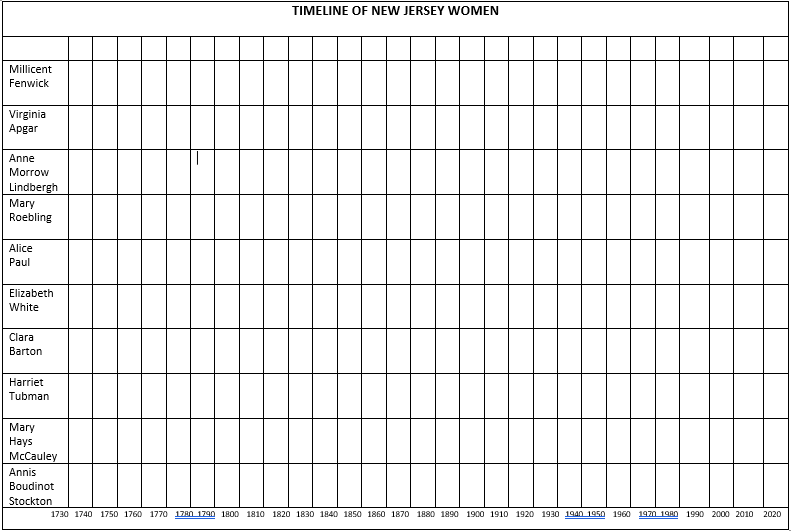
TIMELINE OF NEW JERSEY WOMEN
Millicent Fenwick
Virginia Apgar
Anne Morrow Lindbergh
Mary Roebling
Alice Paul
Elizabeth White
Clara Barton
Harriet Tubman
Mary Hays McCauley
Annis Boudinot Stockton
1730 1740 1750 1760 1770 1780 1790 1800 1810 1820 1830 1840 1850 1860 1870 1880 1890 1900 1910 1920 1930 1940 1950 1960 1970 1980 1990 2000 2010 2020
Certificate of Excellence
We hereby present
____________________________________________
with this certificate of recognition for her contributions to
New Jersey history for:
__________________________________________________________________
__________________________________________________________________
____________________________________________________________________________________________________________________________________
 Awarded on this ____ day of ____________________
Signed __________________
__________________
__________________
__________________