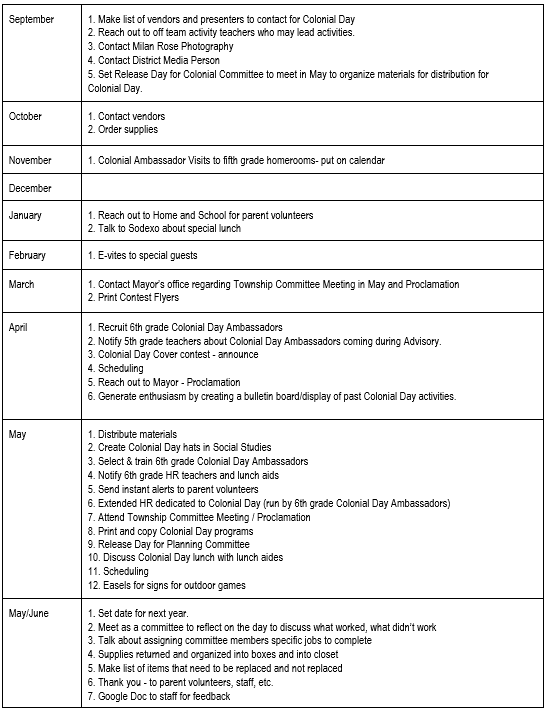
Images of colonial life in New Jersey
Lesson creators: Beth Raff, Patricia Sellar and Ann Cartmell, Auten Road Intermediate School, Hillsborough New Jersey
Grade level: Elementary
Objectives: Students will demonstrate an understanding of what life was like for European colonists in New Jersey in the 1600 and 1700s.
New Jersey Student Learning Standards for Social Studies (2020):
6.1.5.CivicsPI.1: Describe ways in which people benefit from and are challenged by working together, including through government, workplaces, voluntary organizations, and families.
6.1.5.CivicsPD.3: Explain how and why it is important that people from diverse cultures collaborate to find solutions to community, state, national, and global challenges.
Common Core ELA Standards:
- RI.4.2 Determine the main idea of a text and explain how it is supported by key details; summarize the text.
- RI.4.3 Explain…ideas or concepts in a historical…text
- RI.4.4 Determine the meaning of general academic and domain-specific words or phrases in a text
- RI.4.9 Integrate information from two texts on the same topic in order to write or speak about the subject knowledgeably.
- RI.4.10 Read and comprehend informational texts…
- W.4.2 Write informative/explanatory texts to examine a topic and convey ideas and information clearly
- W.4.4 Produce clear and coherent writing in which the development and organization are appropriate to task, purpose and audience
- W.4.7 Conduct short research project that builds knowledge through investigation of different aspects of a topic
- W.4.9 Draw evidence from …informational texts to support analysis, reflection and research
Focus Questions:
How did life in colonial times differ from life today?
Supplementary Resources: Share the following books and book series with your students.
- …If you lived in Colonial Times, by Ann McGovern. (For an online read aloud version, see: PART 1 - If You Lived in Colonial Times by Ann McGovern
- Voices of Colonial New Jersey, a 17 book series developed and published by National Geographic)
- Colonial Life, by Bobbie Kalman. (Children’s Press). “A True Book: American History series allows readers to experience the earliest moments in American history …This series includes an age appropriate (grades 3-5) introduction to curriculum-relevant subjects and a robust resource section that encourages independent study.”
- Colonial America, by Allison Lassieur. (Capstone Press) “Europeans came to the American colonies in the 1600s and 1700s … and built farms, homes, and towns. Many wanted to make their own laws, but that meant going to war against a rich and powerful country. Will you: Travel to Virginia as an indentured servant? Choose between careers as a sailor or a soldier in Massachusetts? Decide which side you’ll take as the country marches closer to revolution?” Product: Colonial America: An Interactive History Adventure
- Outrageous Women of Colonial America; 13 Stories of Courage and Survival in the New World, by Mary Rodd Furbee. “Remarkable stories of remarkable colonial women as Mumbet, a slave who won her freedom in a Massachusetts courtroom; Mercy Otis Warren, America's first female playwright; Peggy Arnold, wife of benedict Arnold and others.”
Activity: Celebrate Colonial Day: After reading about colonial times, have students dress and act as colonists in New Jersey. Each student can be given a different role: e.g., blacksmith, barber, tanner, hunter, farmer, etc. Students will take a walk in the footsteps of a colonial person and be exposed to various aspects of colonial life. Some suggestions include:
- Colonial Tavern
- Colonial Games
- Quill & Ink
- Native American Wampum Bracelets
- Colonial Dancing
- Colonial Music
See attached handouts:
- Costume Ideas for Colonial Times;
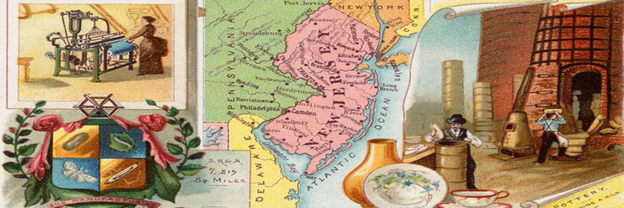
- Colonial Day Sample Schedule;
- Planning Schedule for Colonial Day.
Assessments:
- Write a letter from a colonist to the family or a friend back in Europe, describing what life was like in colonial New Jersey, and whether it was better or worse than the country they left.
- Group Wordle/Tagul
- Illustration
- Storyboard That (website for creating cartoon-like storyboards) http://www.storyboardthat.com/
- Thank you notes
- Poll of Likes/Dislikes
- Acrostic Poems
- Top Ten List
- Class Discussion
Extension:
There are many houses, churches and other buildings from the colonial period still standing in New Jersey. Visit or research information about an historic building in your town or elsewhere in New Jersey from the 1630s-1770s. Have students prepare and present a short presentation about the colonial buildings to the class.
- The Dutch-style Steuben House, built in 1695, in River Edge, Bergen County https://www.bergencountyhistory.org/visitorinfo
- The British-style Hancock House, built in 1735, in Lower Alloways Creek, Salem Count https://dep.nj.gov/parksandforests/state-park/hancock-house/#
- East Jersey Old Town Village East Jersey Old Town Village | Middlesex County NJ
- The Cornelius Low House, a Georgian mansion built by a wealthy Dutch merchant in 1741,in Piscataway, Middlesex County. Cornelius-low-house-museum
- Batsto Village is an historic site in the South Central Pinelands of New Jersey with roots dating back to 1766. https://batstovillage.org/mansion/
- The Marlpit House in Middletown New Jersey dates back to 1667 and has tties to Patriots of the American Revolution, Marlpit Hall - Crossroads of the American Revolution
Handout 1: COSTUME IDEAS FOR COLONIAL TIMES
Hear Ye! Hear Ye! Below you will find some suggestions for costumes to wear on Colonial Day. Please note that costumes are optional, but they do add to the fun!
Pants for men:
- roll up your pants to the knee
- wear baseball or sweat pants with bottom elastic that can be pulled up to your knees
Socks:
- tall baseball or soccer socks
- knee socks for girls
Shirts:
- plain button down/oxford shirt
- shirts with a ruffle
Skirts:
- long skirt from a parent or sibling
- wear a white apron over the skirt
Wig/Hair for men:
- cotton ball wig You can Google this! (http://www.ehow.com/how_4841899_powderedwigcottonballs.html)
- a ponytail tied with a black or dark ribbon
- baby powder in your hair for the white wig effect
Additional items for men:
- vest from a suit
- ascot/scarf around the neck
Additional items for women:
- shawl
Eyeglasses:
- rounded, wire framed glasses
Hats:
- Tricorner hat for men will be made in social studies class
- Bonnet for women will be made in social studies class
PLEASE DO NOT GO OUT AND BUY ITEMS!!!!!
Handout 2: COLONIAL DAY SAMPLE SCHEDULE
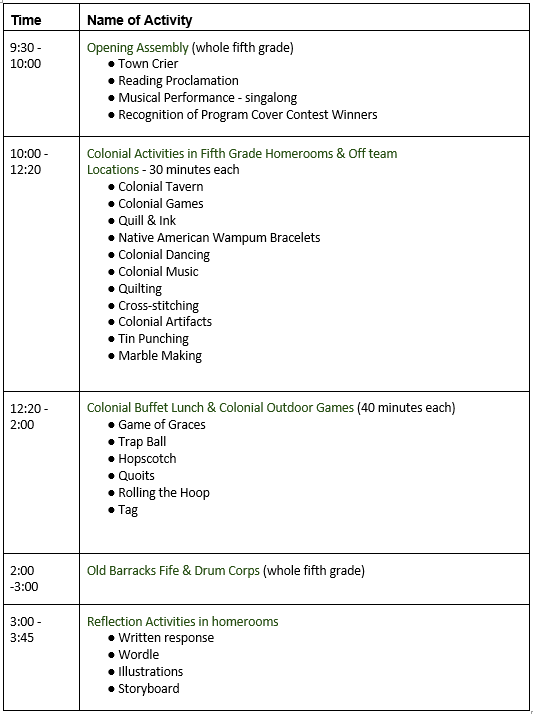
Handout 3: PLANNING SCHEDULE FOR COLONIAL DAY