
 |
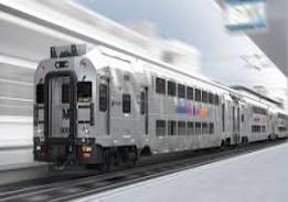 |
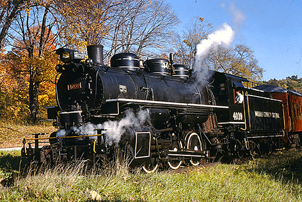
| Old Steam Railroad train | Electric Railroad train |
Grade Level: Elementary
Objectives:
Students will be able to
- explain how a steam engine works
- compare and contrast inventors James Watt and John Stevens
- know about the development of railroads across New Jersey impacted the economies of New Jersey and the United States.
New Jersey Student Learning Standards for Social Studies (2020):
6.1.5.CivicsPI.1: Describe ways in which people benefit from and are challenged by working together, including through government, workplaces, voluntary organizations, and families.
6.1.5.GeoPP.2: Describe how landforms, climate and weather, and availability of resources have impacted where and how people live and work in different regions of New Jersey and the United States.
6.1.5.GeoPP.3: Use geographic models to describe how human movement relates to the location of natural resources and sometimes results in conflict.
6.1.5.GeoHE.2: Cite examples of how technological advances have changed the environment in New Jersey and the United States (e.g., energy, transportation, communications).
6.1.5.GeoGI.1: Use multiple sources to evaluate the impact of the movement of people from place to place on individuals, communities, and regions.
6.1.5.GeoGI.2: Use historical maps to explain what led to the exploration of new water and land routes.
6.1.5.EconET.2: Use quantitative data to engage in cost benefit analyses of decisions that impact the individual and/or community.
6.1.5.EconET.3: Explain how scarcity and choice influence decisions made by individuals, communities, and nations.
6.1.5.EconNM.2: Use data to describe how the availability of resources in New Jersey and other regions in the United States have impacted economic opportunities.
6.1.5.EconNM.3: Describe how the development of different transportation systems impacted the economies of New Jersey and the United States.
Common Core ELA Standards
RI.4.3 Explain events, procedures, ideas, or concepts in a historical, scientific, or technical text, including what happened and why, based on specific information in the text.
RI.4.4 Determine the meaning of general academic and domain specific g of general academic and domain-specific words or phrases in a text relevant to a grade 4 topic or subject area.
RI.4.5 Describe the overall structure (e.g., chronology, comparison, cause/effect, problem/solution) of events, ideas, concepts, or information in a text or part of a tex
W.4.1 Write opinion pieces on topics or texts, supporting a point of view with reasons and information.
W.4.2 Write informative/explanatory texts to examine a topic and convey ideas and information clearly.
W.4.7 Conduct short research projects that build knowledge through investigation of different aspects of a topic.
SL.4.1 Engage effectively in a range of collaborative discussions (one-on-one, in groups, and teacher-led) with diverse partners on grade 4 topics and texts, building on others' ideas and expressing their own clearly
SL.4.4 Report on a topic or text, tell a story, or recount an experience in an organized manner, using appropriate facts and relevant, descriptive details to support main ideas or themes; speak clearly at an understandable pace.
Essential Questions:
- Why did railroads develop and expand?
- How did railroad transportation change the economy of New Jersey?
Vocabulary and Warm-up:
- Have you ever been on a train?
- Where did you go? To New York, Philadelphia, Boston, Washington, D.C., Newark.
- How many people were on your train?
- What other ways could you get to your destination? Cars, buses and airplanes
- How do railroads differ from cars and buses? They have fixed directions and schedules. Buses and cars move on highways and roads and can change directions.
- What are the benefits of traveling by train?
Vocabulary (Suggested definitions in italics):
- What is a train or railroad? (A means of moving people and goods, by way of wheeled vehicles running on rails where vehicles merely run on a prepared surface, rail vehicles are also directionally guided by the tracks on which they run.)
- What is a track? (A railroad track usually consists of steel rails installed on ties on which the “rolling stock”, usually fitted with metal wheels, moves.)
- What is “Rolling stock”? (“Rolling stocks” are the railroad cars that can be coupled - connected together - and uncoupled.)
- What is an “Iron Horse”? (“Iron horse” was an early name for railroads.)
- What is “Horsepower”? (“Horsepower” is a way to measure the rate of work accomplished by steam and later other engines as compared with what a horse could do. For example, the average automobile has 110-150 horsepower or the power of 110-150 horses.)
- What is a “steam engine”? (A steam engine is the result of boiling water to produce mechanical motion, which is used in locomotives, automobiles, trucks, and other machines.)
“The Iron Horse”
Historical Background:
The oldest railways date back to the 6th century B.C. in Greece and were pulled by men. Later horses were used to draw carriages that were coupled (connected) to carry more people and/or goods. The width of the rail was originally based on the width of the Roman Chariot and the first ‘coaches’ were altered stagecoach bodies. Rail transport blossomed after Scottish engineer James Watt (1736-1819) patented a steam engine in 1781 that produced continuous motion. Watt invented the term “horsepower” to compare the output of steam engines with the power of draft horses. Early railroads were called “The Iron Horse” because they were made of metal and did the work that had previously been done by horses.

Early steam engine locomotive
Procedures/Activity: How does a steam engine work?
Share Handout 1: “How Do Steam Engines Work.” Then have students answer the following questions:
- How does a steam engine work?
- Where does the “choo-choo” sound of a locomotive come from?
- What other ways were steam engines used in the 19th and 20th centuries and today? (Possible answer: Steamboats, steam pushing pistons and pulleys for manufacturing,)
Procedures/Comparing Inventors Activity: John Stevens (1749-1838) and James Watt (1736-1819) were both interested in developing the use of steam engines. Have students conduct research (or use the information provided below) and complete Handout 2: Graphic Organizer, which compares John Steven and James Watt. Or prepare a short essay comparing their backgrounds and accomplishments. Essays should note the similarities:
- Both came from prominent families, had excellent educational backgrounds and were curious tinkerers
- Their inventions were practical and had an enormous impact on the improvement of transportation during the early 19th
- Institutions of higher learning were established in their names.
Students should use the graphic organizer, Handout 1, to help them organize their comparison of the two inventors. (Teachers may also read the following paragraphs and determine how to best share additional background with their students.)
James Watt was born in a Scottish seaport on the Firth of Clyde in 1736. His father was a shipwright, ship owner and contractor, and served as a civic officer for the town. His mother came from a distinguished family and was well educated. When he was eighteen, his mother died and his father's health began to fail. Watt travelled to London to study instrument-making for a year, then returned to Scotland, settling in the major commercial city of Glasgow intent on setting up his own instrument-making business. Although steam engines had been in use for more than 50 years, they weren’t very workable. In 1765, Watt realized that too much heat was being lost in the process and developed a model of a more efficient steam engine that provided more steam to perform work. Watt had a working model later that same year and a patent for it by 1781. Watt Memorial Library was begun in 1816 with Watt's donation of scientific books, and developed as part of the Watt Institution by his son, which ultimately became the James Watt College, now part of West College Scotland. For additional information read James Watt - Kids | Britannica Kids | Homework Help; or view James Watt's Steam Engine and https://www.youtube.com/watch?v=TA4eW9cA8H0.
John Stevens was born in Perth Amboy, New Jersey, in 1749. His father was a prominent state politician who served as a delegate to the Continental Congress, and his mother, Elizabeth Alexander, was the daughter of a New York lawyer and statesman. Stevens graduated from King's College (now Columbia University) in 1768. At age 27 he was appointed a captain in Washington's Continental army and was afterwards treasurer of New Jersey. In 1784, he bought land that had been confiscated from a Tory (Loyalist) landowner at a public auction from the state of New Jersey. His land purchase comprised approximately what is now the city of Hoboken. Stevens was a lawyer, engineer and inventor. He constructed the first U.S. steam locomotive, the first steam-powered ferry, the Phoenix, in 1806. On June 10, 1809, the steamship Phoenix left Hoboken on a trip down the Atlantic Ocean along the coastline of New Jersey and then up the Delaware River to Philadelphia. It was the first steamship to successfully navigate open ocean. Stevens also initiated the first U.S. commercial ferry service from in 1811 from Hoboken, NJ to New York City, NY. He obtained the first railroad charter in 1815 and designed and built a steam locomotive capable of hauling several passenger cars in 1825. He also helped to develop U.S. patent law. Stevens built an estate at Castle Point in Hoboken, on land that was given by his son to create Stevens Institute of Technology in 1870. For additional, view John Stevens Locomotive (youtube.com) or read John Stevens - Students | Britannica Kids.
John Stevens and James Watt
|
James Watt |
John Stevens |
|
|
Birth date and place |
Island of Firth, Scotland 1736 |
Perth Amboy, NJ 1745 |
|
Families |
Father a civic leader Mother from a distinguished family and well-educated |
Father a prominent statesman Mother from a distinguished family |
|
Eduational Background |
Well educated |
Graduated from a prestigious university |
|
Accomplishments |
Developed and patented in 1781 a workable steam engine |
Constructed the first U.S. steam locomotive, and the first steam-powered ferry, the Phoenix in 1806, and the first U.S. commercial ferry service in 1811 from Hoboken, NJ to New York City, NY. Obtained the first railroad charter in 1815 and designed and built a steam locomotive capable of hauling several passenger cars in 1825. Helped to develop U.S. patent law. |
|
Legacies |
Watt Memorial Library, now part of West College in Scotland |
Stevens Institute of Technology in Hoboken, NJ |
|
Other information |
The Development of Mainline Railroads
Historical Background:
With steam engines, it was possible to construct mainline railways, which were a key component of the industrial revolution. Railways reduced the costs of shipping and allowed for fewer lost goods when compared to shipping over water. The change from canals to railways allowed for "national markets" in which prices varied little from city to city. Watt’s steam engine also enabled a wide range of manufacturing machinery to be powered since the engines could be placed anywhere that water and coal or wood fuel was available.
The first government charter for a railroad in the United States was issued by New Jersey in 1815 for the New Jersey Railroad Company to “erect a railroad from the river Delaware near Trenton, to the river Raritan, at or near New Brunswick,” as proposed by John Stevens. However, the proposed railroad was never built due to the inability to attract financial investors. The first commercial railroad started operations in 1826 in Massachusetts. In 1830, the Baltimore and Ohio (B&O) Railroad Company built the first American steam locomotive. The B&O Railroad was one of the first commercial lines in the world and it was enormously successful. In 1832, New Jersey’s Camden and Amboy Railroad, a component of the recently formed “Joint Companies” rail and canal transportation monopoly, began operating freight trains in New Jersey with a steam engine locomotive. In 1836, the Morris and Essex Railroad began passenger service between Morristown and Orange with a horse-drawn car making two trips a day for a fifteen cent fare each way.
The railroads were soon putting the canals that had been built in the 1820s and 30s out of business because they were so much faster. For example, it took 5 days to ship coal by the Morris Canal across northern New Jersey as compared to 8 hours by rail. By the end of the 19th century, commercial traffic on the Morris Canal had become negligible. In 1923, the State of New Jersey took possession of the canal and formally abandoned it in 1924. The Delaware and Raritan (D&R) Canal was one of America’s busiest navigation canals during the 1860s and 70s when it carried coal from Pennsylvania to feed the industrial boom in New York and New Jersey. By the end of the 19th century, use of the D&R Canal declined as it was unable to compete with the power and speed of the railroads. The D&R Canal’s last year of operation at a profit was 1892. It stayed open through 1932 when the State of New Jersey took it over and rehabilitated it to serve as a water supply system. For more information, see the Canal Transportation in New Jersey lesson.
Activity: Compare canal and rail transportation and how it impacted the economies of NJ and the U.S. (suggested answers bulleted in italics):
- Compare Handout 3: Railroad Map of New Jersey (1869) with Handout 4: Canal Map of New Jersey (1834).
- Place your finger on one of the railroad lines and take a “finger trip” throughout the states. Describe the many different places that you could travel to by railroad in the 1860s.
- Students may use the graphic organizer Handout 5 to help them organize their facts.
- Which system had more access to various towns and areas of New Jersey?
- The railroads. Nearly every major city was linked by railroad.
- What advantages did railroads have that canals lacked?
- Canals and rivers were unavailable in the winter season due to freezing, but the railroads ran year-round despite poor weather.
- Railroads were safer: the likelihood of a train crash was less than the likelihood of a canal barge sinking. A “barge” is a flat-bottomed boat for carrying freight, typically on canals and rivers, either under its own power or towed by animal power (typically a mule).
- Travel by rail was faster than travel by water. For example, it took 5 days to ship coal by the Morris Canal across northern New Jersey as compared to 8 hours by rail.
- The railroads provided cost-effective transportation because they allowed shippers to have a smaller inventory of goods, which reduced storage costs during winter, and to avoid insurance costs from the risk of losing goods during transit
- How did these new transportation systems help transition New Jersey from an agricultural to an industrial society?
- Trains allowed more goods and people to be moved to a greater number of places more quickly, helping to expand the marketplace from local to regional.
Comparison of New Jersey's Canals and Railroads, c. 1869
|
Railroads |
Canals |
|
|
Which system had more access to various towns and areas of New Jersey? |
Trains do not need to be on water so they can be built anywhere and therefore can be closer to more places. Nearly every major town in New Jersey was linked by railroad. |
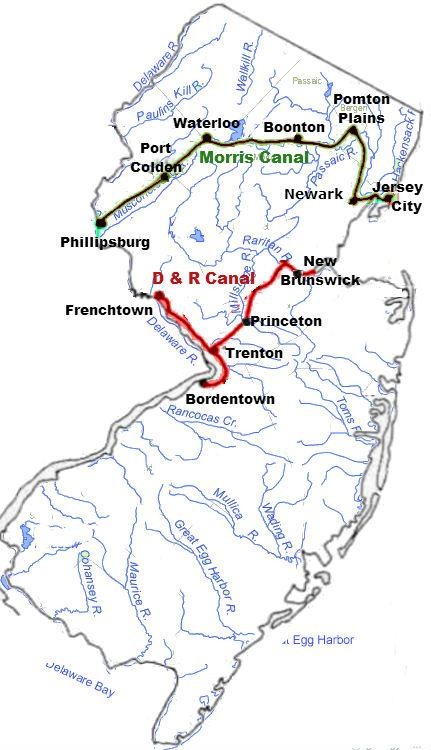
The two canals only linked across the states from Jersey City to Philipsburg (Morris Canal) and from New Brunswick to Trenton (D&R Canal) |
|
Which system of transportation was faster? |
Trains are faster. Trains could do in 8 hours what it took canals 4 days. |
Barges on the canals moved at the pace that mules could pull them. |
|
Which system of transportation was safer? |
Trains are less likely to have accidents than boats. |
Barges on canals are subject to sinking. |
|
Which system of transportation costs less? |
Since trains could carry more people and goods and travel faster, they were more cost efficient than using boats on canals. |
Barges on canals had limited capacity and traveled slowly, making them less cost efficient. |
|
Which system was more limited by the weather? |
Trains can travel in any kind of weather |
Boats can’t travel on canals in the winter when water is frozen. |
|
Other questions? |
The Expansion and Consolidation of Railroads in New Jersey
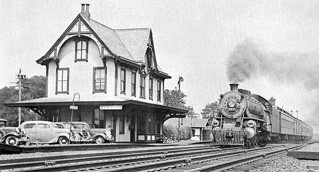
Skillman, NJ train station, 1893-1938
The railroad industry quickly expanded. The Pennsylvania Railroad (PRR), founded in 1846, began with service between Harrisburg and Pittsburgh but rapidly expanded. The Central Railroad of New Jersey (CNJ) began with a line between Elizabeth and Somerville in 1846 and then extended westward to Phillipsburg and east to Jersey City, gradually acquiring other branches, to the south and southwest. In the 1880s, electrified trains were introduced, and rapid transit systems came into being.
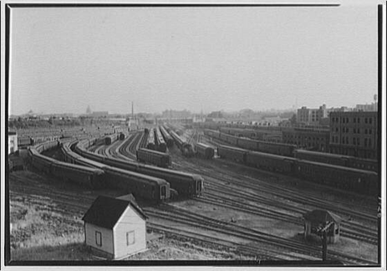
Railroad yard, ca 1920
The biggest hindrance to growth in New Jersey was the lack of direct rail access to New York City. The PRR began work on two tunnels under the Hudson River in 1902 that was completed in 1910. The tunnels served the new Pennsylvania Station. By 1920, the railroad was running hourly service through New Jersey between New York City and Washington D.C. Most of the railroads operated both freight and passenger services, with freight service proving to be the more profitable of the two. Because of New Jersey’s close proximity to Pennsylvania, the principal commodity transported for most of the railroads was coal. The large passenger rail network that existed at the turn of the twentieth century was mostly due to the success of the freight rail industry.
Railroad yard, ca 1920
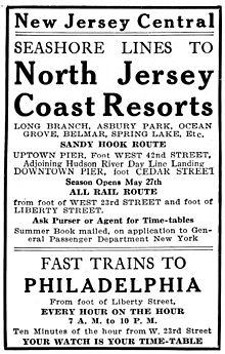
1915 CNJ ad for service from New York
New Jersey’s Railroads Today
With the advent of improved paved roads, trucking businesses had become major competitors to transporting freight by rail by the 1930s. As the Interstate Highway System was developed in the 1950s, trucks increased their market share of freight business. Railroads continued to carry bulk freight such as coal, steel and other heavy commodities. Many passenger railroads were driven out of business due to competition from highways and airlines.
The Penn Central Railroad filed for bankruptcy in 1970. The National Railroad Passenger Corporation, commonly known as Amtrak, was established in 1971 to relieve the freight railroads of their intercity passenger rail obligations. Conrail, a quasi-private freight rail operator, took over operations of the bankrupt freight lines, with support from the federal government. Maintenance and responsibility of the Northeast Corridor was assigned to Amtrak, but Conrail provided the freight and commuter service.
Since 1983 each state in the Northeast has provided commuter rail service. New Jersey Transit Rail Operations, the rail division of New Jersey Transit, is the state-run agency that provides commuter rail service in New Jersey. There are 11 railroad lines across New Jersey, most of them providing transportation to and from New York City, Hoboken, and Newark, with one line running between Atlantic City and Philadelphia. Today most of the trains in New Jersey are electrified but some are powered by diesel fuel. New trains are dual powered, meaning they can run on diesel or electricity.
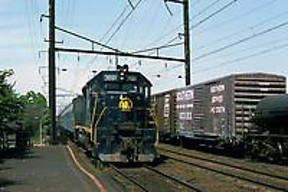
Electrified New Jersey Coast Line train in Elizabeth, 1976
Assessment: How have the railroads in New Jersey changed from the 1800s to today?
Students write a short essay. Good scores should include recognition of competition from cars, buses and trucks on roads as well as airlines. Also change in source of power from steam to diesel to electric. High scores should include reference to how the technology and greater expansion of roads and airlines have reduced the use of railroads in the mid-20th century much as railroads largely replaced canal and other water transportation in the second half of the 19th century.
Extension
What do you like best about riding a railroad train? Why? If most students have not taken a train:
- Take students to the Whippany Railway Museum where they can ride vintage For more information call 12-4 p.m. (973) 887-8177or go to Whippany Railway Museum
- Or the New Jersey Museum of Transportation in Allaire State Park. For information go to Pine Creek Railroad
Or the United Railroad Historical Society of New Jersey. For more information go to United Railroad Historical Society of New Jersey
Handout 1
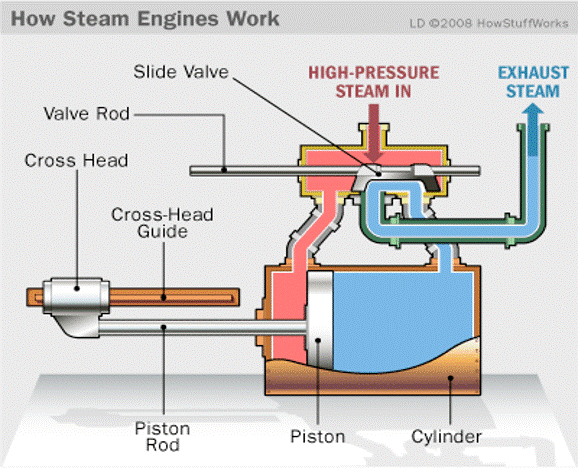
Piston Steam Engine typical in steam locomotives
Handout 2
John Stevens and James Watt
|
James Watt |
John Stevens |
|
|
Birth date and place |
||
|
Families |
||
|
Educational Background |
||
|
Accomplishments |
||
|
Legacies |
||
|
Other information |
Handout 3
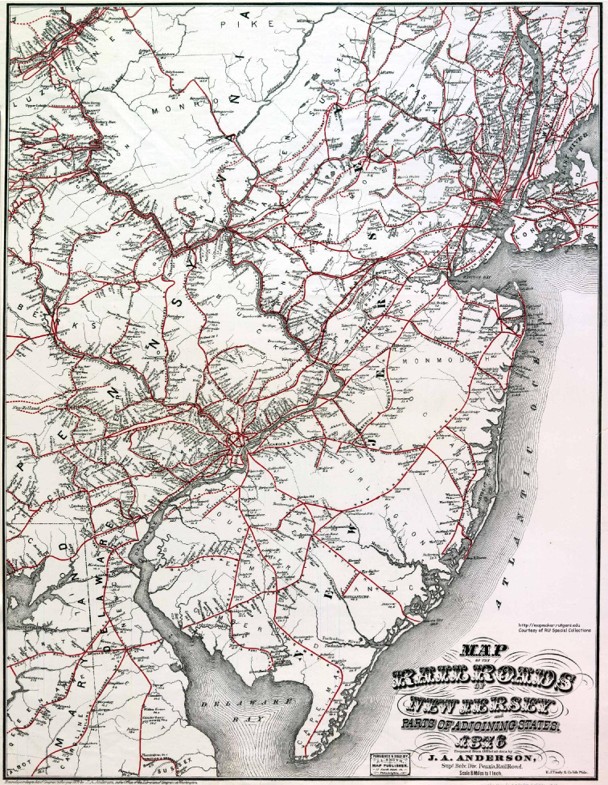
Map of Railroads in New Jersey, 1876 at https://geography.rutgers.edu/images/NJ_Historical_Maps/RAILROADS/NJ_RR_1876.jpg
Handout 4
Morris (green) and D&R (red) Canals
Handout 5
Compare Railroad Map of New Jersey (1869) and Canal Map of New Jersey (1834)
|
Railroads |
Canals |
|
|
Which system had more access to various towns and areas of New Jersey? |
||
|
Which system of transportation was faster? |
||
|
Which system of transportation was safer? |
||
|
Which system of transportation costs less? |
||
|
Which system was more limited by the weather? |
||
|
Other questions? |