Lesson Creator: New Jersey Center for Civic Education, Rutgers University, Piscataway, NJ
Grade Level: Elementary
Objectives: Students will be able to:
- Identify factors that make New Jersey conducive to agriculture and food production
- Explain the impact of location and transportation on food production
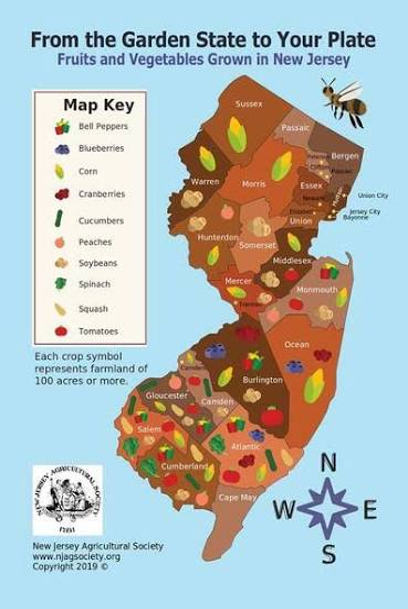
- Identify food products that are grown in New Jersey
- Take a stand and support your position on whether New Jersey should continue to be called the “Garden State”
New Jersey Student Learning Standards for Social Studies:
6.1.5.GeoPP.2: Describe how landforms, climate and weather, and availability of resources have impacted where and how people live and work in different regions of New Jersey and the United States
6.1.5.GeoHE.1: Use a variety of sources from multiple perspectives, including aerial photographs or satellite images to describe how human activity has impacted the physical environment during different periods of time in New Jersey and the United States.
6.1.5.GeoHE.2: Cite examples of how technological advances have changed the environment in New Jersey and the United States (e.g., energy, transportation, communications)
6.1.5.EconEM.4: Compare different regions of New Jersey to determine the role that geography, natural resources, climate, transportation, technology, and/or the labor force play in economic opportunities
6.1.5.EconNE.3: Describe how the development of different transportation systems impacted the economies of New Jersey and the United States.
6.1.5.EconNE.4: Explain how creativity and innovation resulted in scientific achievement and inventions in many cultures during different historical periods.
6.1.5.EconGE.2: Illustrate how production, distribution, and consumption of goods and services are interrelated and are affected by the global market and events in the world community.
6.1.5.HistoryCC.9: Evaluate the impact of ideas, inventions, and other contributions of prominent figures who lived New Jersey.
6.3.5.CivicsPD.3: Propose a solution to a local issue after considering evidence and the perspectives of different groups, including community members and local officials
6.3.5.GeoHE.1: Plan and participate in an advocacy project to inform others about the impact of climate change at the local or state level and propose possible solutions.
Anticipatory activity
Ask students: Where does the food that you eat come from? Then discuss.
Our food comes from all around the globe, but some of it is grown right here on farms in New Jersey. Even today, agriculture remains a key part of New Jersey’s economy and identity.
Ask students which food they think are grown in New Jersey? Then discuss.
New Jersey produces blueberries, cranberries, peaches, corn and tomatoes, often ranking among the top 10 U.S. producers for each. Hammonton is known as the “Blueberry Capital of the World.” And the Jersey Pine Barrens are famous for cranberry bogs.
The State Fruit: The Blueberry!
The blueberry is, in fact, the State Fruit of New Jersey. Elizabeth Coleman White developed the nation's first cultivated blueberry in Whitebog, New Jersey (See Innovations from New Jersey). The blueberry became the official state fruit in 2004. In 2003, fourth graders at Veteran's Memorial Elementary School in Brick campaigned to make the blueberry the official state fruit. The students had their idea introduced as legislation and conducted a lobbying campaign to see its passage, including media interviews, a letter and petition drive, presentations to local governing bodies, and a trip to the state's blueberry festival in Whitesbog. In addition, the classes traveled to Trenton to make presentations before Senate and Assembly Committees.
Ask your students to explain why the blueberry should be New Jersey’s state fruit? Responses might include the following:
- The blueberry industry significantly contributes to New Jersey's economy.
- New Jersey is one of the top producers of blueberries in the United States.
- The fruit is native to North America, with a long history in the region.
- Blueberries are recognized for their health benefits and nutritional value.
- The designation promotes agricultural awareness and local farming initiatives.
- The blueberry is celebrated in various festivals and events throughout the state.
What makes New Jersey good for agriculture?
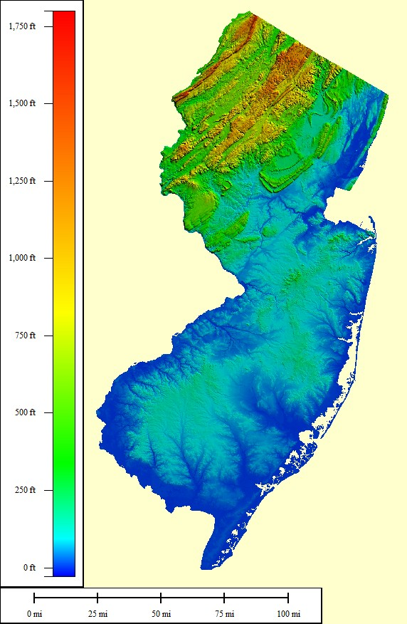
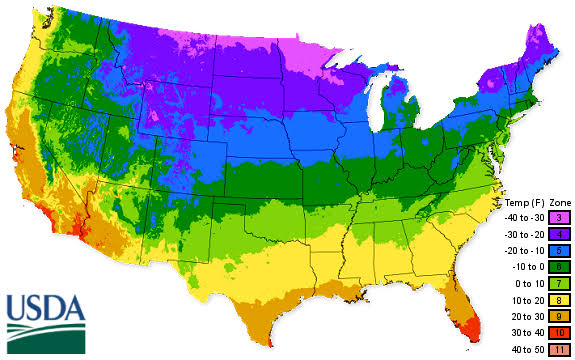
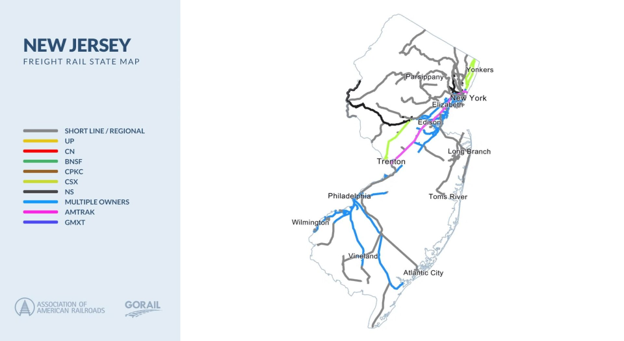
Show students Handout #1 (Topographical map of New Jersey) and have them identify what might make New Jersey good for agriculture. Then have students consider Handout #2 (a chart of climates in New Jersey and other parts of the country) as well as Handout #3 (transportation by water, rail and road) and have them identify which factors help encourage agriculture in New Jersey. Students should use Handout #4 to identify the most common crops grown in New Jersey. They should conclude that the fertile land, mild climate and extensive transportation network all encouraged the use of the land for agriculture in New Jersey.
The Garden State
Underscoring its agricultural history, New Jersey obtained the nickname, the “Garden State”. In 1876, during the U.S. Centennial Exhibition in Philadelphia, Abraham Browning, a prominent Camden attorney and former Attorney General of New Jersey, described New Jersey as a “garden between two great cities—New York and Philadelphia. He said that both cities “ate out of New Jersey’s basket” of fresh produce, dairy and other farm goods. The nickname stuck and was officially recognized as the state slogan in 1954 when the New Jersey legislature passed a bill adding “The Garden State” to license plates.
Although there were over 34,000 farms in New Jersey according to the census in 1900, comprising more than 57% of the state’s total land mass, today only approximately 10,000 farms remain, comprising only 16% of the land area of the state.
Ask your students: Do you think that New Jersey should still be called “The Garden State” to reflect its history or should it change its nickname since farming is no longer the main use of land in the state?
Extension: Encourage your students to go to the annual Blueberry Festival in Whitesbog https://festivalnet.com/13712/Browns-Mills-New-Jersey/Festivals/Whitesbog-Blueberry-Festival or to visit one of the many fruit and vegetable stands along the New Jersey roads.
Handout #1: Topographical map of New Jersey
Handout #2: Climate Comparisons
Handout #3: Transportation – Freight Rail, Roads
Handout #4 - New Jersey Agricultural Produce Map