
Power and Authority
Prepared by: The New Jersey Center for Civic Education, Rutgers University, Piscataway, NJ
Grade level: 6-8
Standards:
- 6.1.8.HistoryUP.3.a: Use primary sources as evidence to explain why the Declaration of Independence was written and how its key principles evolved to become unifying ideas of American democracy.
- 6.3.8.CivicsPI.1: Evaluate, take, and defend a position on why government is necessary, and the purposes government should serve.
- 6.3.8.CivicsPR.2: Evaluate the effectiveness of the fundamental principles of the Constitution (i.e., consent of the governed, rule of law, federalism, limited government, separation of powers, checks and balances, and individual rights) in establishing a federal government that allows for growth and change over time.
Objectives: Students will be able to:
- Explain the difference between power and authority.
- Identify various sources of authority.
- Compare situations where power and authority are involved.
- Identify the sources of a bully’s power and actions individuals can do to stop a bully.
Definitions:
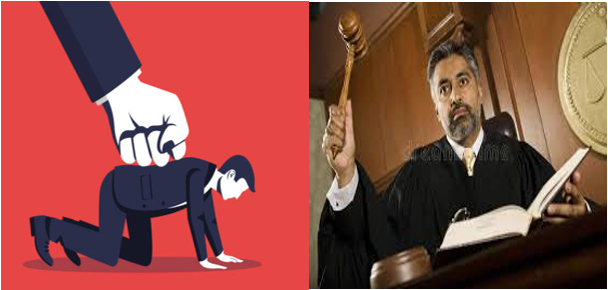
- Power is the ability to control or direct something or someone. The sources of power can come from personal or physical traits, wealth, position, status, expertise, or control over resources. Power very often operates without legitimacy or consent.
- Authority is power combined with the right to exercise that power. The source of authority can come from employment or social positions, customs and traditions, rules and laws, or moral principles. The right to use power operates with legitimacy and some form of consent. (For more, see below: Critical thinking: Where does the right to exercise authority come from?)
- Legitimacy means the quality of being lawful, valid, or acceptable according to established rules, laws, or standards. Power often lacks legitimacy, whereas authority requires legitimacy.
Critical thinking: Where does the right to exercise authority come from?
- Roles - Jobs or positions in society include authority. Teachers’ authority maintains learning environments; ushers help create order in a theater; crossing guards provide safety for students. Ask students for additional examples.
- Custom or Tradition - For instance, waiting in line for tickets or service is related to the custom of first come, first served. Standing during the pledge of allegiance and the playing the national anthem are traditions that reinforce loyalty and love of country. Ask students for additional examples.
- Rules and Laws—Authority is often based on laws. It is law that gives police the authority to arrest you if you commit a crime, a jury the authority to assess your guilt, and a judge the authority to sentence you to prison. Ask students for other examples.
- Moral principles—Authority often emanates from the teachings of major religions. Examples include those listed in the “Ten Commandments, (E.g., Thou shall not kill or steal or bear false witness) Versions of the “Golden Rule” (Treat others as you would like them to treat you) can be found in Islam Buddhism, Judaism, and Christianity. Moral principles often overlap with custom and laws. Ask students for other examples.
- Consent - When consent is offered or reasonably inferred, it provides legitimacy and authority to an action. Consent means to give agreement or approval for something to happen. Consent can be (1) explicit, where agreement is clearly or directly expressed by words or actions; or (2) implicit, where agreement is implied or assumed. Ask students for examples of both explicit and implicit consent.
Activity: Help students clarify the difference between power and authority with the following relatable circumstances. For each example, have students identify whether power or authority is exercised and what is the source of that power or authority. Where authority is exercised, have students identify the source of authority. Finally, have students discuss the presence or absence of consent and legitimacy in the example? (Suggested answers and explanation are italicized in the parentheses that follow)
- A jury decides that Maggie Smith is guilty of robbery and the judge sentences her to prison. Is this power or authority? (AUTHORITY: The law and legal tradition provides the jury with the authority to determine the facts of a case and the judge with the authority to sentence a person for committing a crime. When we agree to remain and live in a community or society, we imply our consent to the laws and legal traditions of that community or society.)
- Bob Washington, who is bigger than most of his friends, cuts in front of the line at the movie theatre. (POWER: Bob Washington’s physical size and strength is used to cut in the line. There is no accepted custom or tradition that people who are larger and stronger deserve this kind of preference. Also, the custom of waiting in lines implies everyone's consent to wait their turn. Cutting in line violates that implied consent.)
- Chris Matthew’s parents go out and leave him in charge, and he tells his younger brother not to touch his computer. (AUTHORITY: Chris’s parents have authority over his brother. They transferred that authority when they put Chris in charge. The parents’ words were explicit consent. The legitimacy of the parent child relationship is recognized in both traditions and law.)
- A referee ejects two players from a game because they started fighting. (AUTHORITY: The referee has been trained and licensed by the league which organizes the game. His training and position provides him authority within the context of the game. The license is an explicit consent for his or her authority. The legitimacy of the referee’s position is related to the tradition of fair play or order in sports.)
- Richard Lee tells his son that he is grounded because he broke his curfew. (AUTHORITY: Parents have the authority and the responsibility to protect the safety and health of their children. Consent is implied or assumed within the relationship. The legitimacy is recognized in both traditions and law.)
- A thief robs you at gunpoint. (POWER: Obviously, the thief has no RIGHT to rob or steal from others. The gun provides the coercive advantage in the relationship at that moment. The individual who is robbed did not consent to his or her property. Their right to the property lay in the law, as well as our sense of morality.)
- The city council refuses to give permission to a group of students who want to use the park for a protest rally. (AUTHORITY: The city council was elected through democratic processes and therefore has authority over local ordinances like permits required for parks in the community. Their election is explicit consent to exercise that authority. The council’s legitimacy lay in the election of its members and the law, not in the quality of their decision.)
Teachers are encouraged to create additional or different examples and names that are relatable to the student population they teach.
What about bullies?
Bullies use some form or power or advantage to get what they want from victims without the victims’ consent. The Center for Disease Control and the U.S Department of Education define bullying as unwanted aggressive behavior which involves an actual or perceived power imbalance and is repeated multiple times. Common types of bullying include:
- Physical bullying of the person (hitting, kicking, tripping, etc.)
- Physical bullying of another’s property (malicious vandalism or defacement)
- Verbal bullying (name-calling, teasing, etc.)
 Relational, reputational or social bullying (spreading rumors, social exclusion, etc.).
Bullying is a widespread problem faced by students
- 19.2% of students in grades 6-12 experienced bullying nationwide during the 2021-2022 school year.
- 15.4% of students reported being bullied by a student who was more powerful than them in some way
- 14.5% reported being bullied repeatedly,
- The prevalence of bullying is higher in middle school (26.3%) than in high school (15.7%) and higher among female students (21.8%) than among male students (16.7%).
(For more statistics on bullying experienced by students in American schools, see Facts About Bullying | StopBullying.gov)
 What about cyberbullying?
Cyberbullying is bullying that takes place over digital devices. Cyberbullying includes sending, posting, or sharing negative, harmful, false, or mean content about someone else. The most common places where cyberbullying occurs are:
- Social Media, such as Facebook, Instagram, Snapchat, and Tik Tok
- Text messaging and messaging apps on mobile or tablet devices
- Instant messaging, direct messaging, and online chatting over the internet
- Online forums, chat rooms, and message boards, such as Reddit
- Email and Online gaming communities.
(For more information, see What Is Cyberbullying | StopBullying.gov)
Activity: View Is it Cyberbullying?. The video describes three hypothetical circumstances involving digital media. After each circumstance, the video asks, “Is It cyberbullying?” Stop the video after each of the three scenario and discuss the circumstance with your students. Ask them to answer the question and provide specific reasoning. After discussion, continue the video for further explanation and the next hypothetical scenario.
What can schools and teachers do to stop a bully?
Teachers can incorporate the topic of bullying prevention in lessons and activities in their classrooms. Consider the following examples of activities to teach offered at Prevention at School | StopBullying.gov:
- Internet or library research, on types of bullying, prevention, and student response
- Oral presentations, such as a speech or role-playing
- Class and small group discussions on hypothetical situations
- Creative writing, such as a poem, a story or skit
- Artistic works, such as a collage or painting
- Classroom meetings to talk about peer relations
Most importantly, students need to know that the schools and classrooms they enter are safe environments. For more detail, see Create a Safe and Supportive Environment.
What can students do to prevent bullying?
Someone who witnesses bullying, either in person or online, is a bystander. Bystanders have the potential to make a positive difference in a bullying situation. When bystanders to bullying intervene, bullying stops within 10 seconds 57 percent of the time. (Source: Effects on Bystander Intervention Behavior. School Psychology Review, Volume 41, No. 1, 47–65)
There are many things that bystanders can do:
- Question the bullying behavior. Simple things like changing the subject or questioning the behavior can shift the focus.
- Use humor to say something funny and redirect the conversation.
- There is strength in numbers too! Bystanders can intervene as a group to show there are several people who don’t agree with the bullying.
- Walk with the person who is the target of bullying to help diffuse potential bullying
- Reach out privately to check in with the person who was bullied.
(For more on what students can do, see Bystanders to Bullying | StopBullying.gov