
Why was New Jersey the Crossroads of the American Revolution?
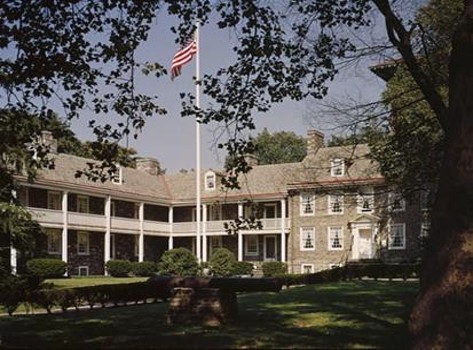
Old Barracks, Trenton, NJ
Creator: New Jersey Center for Civic Education, Rutgers University, Piscataway, NJ Grade Level: Elementary
Time: Five 40-minute periods
Objectives: Students will be able to:
- Compare and contrast the views and experiences of some New Jerseyans who were Patriots and others who were Loyalists
- Identify the events and impact of some of the battles of the American Revolution fought in New Jersey
- Identify the resources New Jersey provided to support the American Revolution
- Justify why New Jersey is called the “Crossroads of the American Revolution”
New Jersey Student Learning Standards for Social Studies (2020):
6.1.5.GeoSV.2: Use maps to explain the impact of location and place on the relationships between places in New Jersey, the United States and other countries.
6.1.5.EconET.1: Identify positive and negative incentives that influence the decisions people make.
6.1.5.EconET.2: Use quantitative data to engage in cost benefit analyses of decisions that impact the individual and/or community.
6.1.5.EconET.3: Explain how scarcity and choice influence decisions made by individuals, communities, and nations.
6.1.5.EconEM.6: Explain the system of mercantilism and its impact on the economies of the colonies and European countries.
6.1.5.HistoryCC.1: Analyze key historical events from the past to explain how they led to the creation of the state of New Jersey and the United States.
6.1.5.HistoryCC.13: Craft a claim explaining how the development of early government Structures impacted the evolution of American politics and institutions.
6.1.5.HistoryUP.5: Compare and contrast historians' interpretations of important historical ideas, resources and events.
Common Core ELA Standards:
RI.4.3 Explain events…ideas or concepts in a historical…text.
RI.4.7 Interpret information presented visually…or quantitatively and explain how the information contributes to an understanding of the text
R.1.4.9 Integrate information from two texts on the same topic in order to write about the subject knowledgeably.
RI.1.10 Read and comprehend informational texts, including history/social studies…
W4.1 Write opinion pieces on topics or texts, supporting a point of view with reasons and
W4.2 Write informative/explanatory texts to examine a topic and convey ideas and information clearly.
W.4.4 Produce clear and coherent writing in which the development and organization are appropriate to task, purpose and audience.
W.4.7 Conduct short research projects that build knowledge through investigation of different aspects of a topic.
W.4.9 Draw evidence from …informational texts to support analysis, reflection and research.
Essential/Focus Questions
- Why was the American Revolution fought?
- Did everyone support the war and the troops? Were Americans united as a nation at this time?
- What were the different perspectives of Loyalists, Patriots, and Continental officers regarding the Revolution and whether the people should support the army?
- What happened to the Loyalists after the war?
- Why was New Jersey called the “Crossroads of the Revolution”?
- Why was New Jersey the site of so many battles and encampments in the American Revolution?
- What challenges faced the Continental Army as it encamped in New Jersey?
- What was the effect of the war and the encampments on the population?
- Besides taking part in the battles, how else did people in New Jersey support the Revolutionary War?
Day One: Why was the American Revolution fought?
The American Revolution was fought for many reasons: both economic (mercantilism, the Proclamation Line, and taxation) and ideological (the right to make their own decisions).
1. Mercantilism
Background: Mercantilism was the economic policy that was followed by Britain in the 18th century. Based on the idea that national wealth and power were best served by increasing exports and collecting precious metals, this policy was followed by other Western European countries, including the Netherlands, France and Spain, starting in the 16th century. It required government control of foreign trade. Colonies were to provide raw materials and markets for exports. Goods bound for colonies had to go to England first for duties. Colonists were not allowed to manufacture certain products so as not to compete with British. Mercantilist policies included:
- High tariffs, especially on manufactured goods
- Exclusive trade with colonies
- Forbidding trade to be carried in foreign ships
- Export subsidies
- Banning all export of gold and silver
Activity: Share Handout 1 and have students determine who benefitted from mercantilism.
Possible Responses: European monarchs, merchants, shipping and trading companies benefitted the most from the economic system of mercantilism. Gold and silver all went to the British monarch. The colonies had to use only British ships and trade only with Britain. So, Britain was setting all the terms of trade for its advantage.
Adam Smith, a product of the Enlightenment on Scotland, wrote a strong attack on the mercantilist system in 1776. He argued that a nation could increase its wealth through the labor of its people rather than through the quantity of its gold or silver. At the same time, an alternative economic system was developing in Europe and its colonies: capitalism. Capitalism is an economic system based on the private (as opposed to government) ownership of the means of production; the creation of goods and services for profit; competitive markets; voluntary exchange; and wage labor. The commercial stage of capitalism originated in the 18th century with the British and Dutch East India Companies. Merchants invested capital in these companies and other colonies seeking a profit or return on their investment. (Note that Smith’s study was not available before the start of the American Revolution. However, it provides an understanding of the economic changes that were taking place at the time,)
Activity: Share Handout 2 and have students compare the impact of opportunities for the British North American colonies offered by mercantilism and capitalism and determine which would be more favorable for the colonists.
Possible Responses: Capitalism would allow the colonists to keep and use their natural resources, such as cotton, rather than shipping it to Britain. It also would allow them to make their own finished products rather than having to import them from Britain. Capitalism would be more beneficial for the colonies.
2. The Proclamation Line
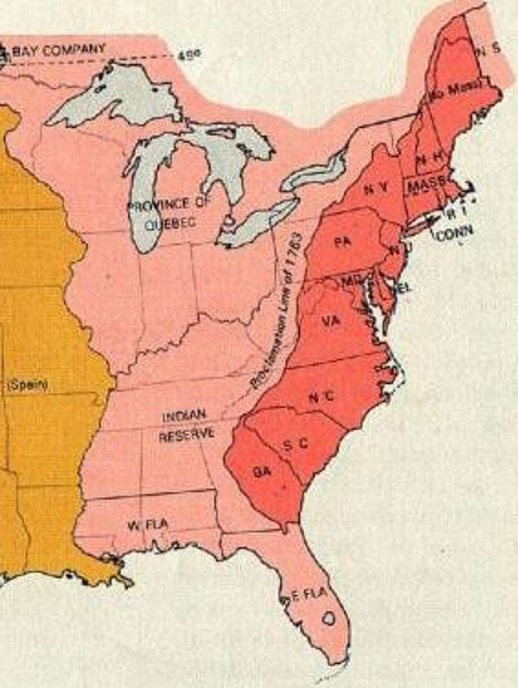
Background: After the Britain won the French and Indian War (known as the Seven Years War in Europe) in 1763 and gained a large amount of land in North America from France, King George and the British Parliament decided to keep an army to police newly acquired Canada and to keep peace in the western frontier between land-hungry colonists and Native Americans. They set a Proclamation Line in 1763 which limited colonists from settling beyond the Appalachian Mountains.
Activity: Have students consider Handout 3: Map of the Proclamation Line, and identify where the Proclamation line limited colonists from moving west and explain why this bothered the colonists.
Possible Responses: The Proclamation Line limited colonists from moving to western New York, western Pennsylvania, western Virginia, western North Carolina and western Georgia. The colonists wanted more land to farm, especially the tobacco growers in Virginia because tobacco was depleting the soil. They also did not like the idea of a standing army, which might be used to prevent them from moving to these western lands.
Day Two: Why was the American Revolution fought (continued)?
3. Taxation
Background: In 1765, Britain followed with a Quartering Act requiring provincial governments to provide supplies to British troops within their borders--which New York argued was a tax in the form of goods rather than money. Britain also needed to pay for the war. In order to pay the debts from the French and Indian War, that year Britain also tried to impose a tax on stamps in the colonies, similar to taxes already imposed in England, and gave the colonies a year to suggest alternative ways of raising revenues. Previously the British American colonists had not been directly taxed by Britain—they had only paid duties (another form of raising revenues) on exports from Britain or other British colonies.
Stamps were not used for postage then—there was no postage delivery system yet. They were used on legal documents, on books and newspaper, and on liquor licenses. This affected lawyers, doctors, readers, newspaper writers and publishers, and tavern owners. The colonists, led by the Virginia House of Burgesses, protested that the proposed tax was an interference with their rights—that only their colonial assemblies could impose taxes on its residents. Nine colonies sent representatives to a Stamp Act Congress in New York in October 1765, which declared the Stamp Act “unconstitutional,” that is, inconsistent with the rights of Englishmen. Public pressure (basically a refusal to obey the law) by the colonists resulted in the repeal of the Stamp Act in 1766 before it ever went into effect.
Instead, Parliament asserted it power to enact laws that bound the colonies in “all cases whatsoever” in a Declaratory Act and in 1767 imposed a new revenue-raising import duty on paper, lead, paint, and tea to pay for the cost of administering the colonies. The colonists protested that this too was unfair because they had always administered themselves. Again, they refused to obey and agreed to nonimportation agreements not to purchase British goods—an economic boycott. The first of many times Americans would use the economic tool of boycotting.
Activity: Have students look at the image and content of Handout 4: The Stamp Act, and determine who would be most affected by the Stamp Act and why.
Possible Responses: Since stamps were used on legal documents, on books and newspaper, and on liquor licenses, lawyers, doctors (health certificates), booksellers, newspaper publishers and tavern owners would be impacted by the Stamp Act. This was a large group and they were the most vocal elements of society.
History connected and continued: By 1775, the American Colonies were arguing “No taxation without representation.” They were interested in preserving their right to self-governance. The feared that the Quebec Act would extend Catholicism and limit colonial expansion. They distrusted British economic intentions (to enrich itself at expense of the colonies) and were concerned about their own economic prosperity and stability. The British government argued that the American colonies must share the burdens (taxation) as well as the benefits of British protection. They were interested in having the American colonies help pay for costs of protection and acknowledge Britain’s right to tax its colonies. They saw the call for an economic boycott against Britain as treasonous.
Instead of seeking a solution, the colonists wrote the Declaration of Independence on July 4, 1776. The Declaration was written not only to actually declare independence but also to explain to the British king and Parliament why they were seeking independence and to try to encourage other colonies (Ireland was being treated by Britain much as a colony at the time, as well as Canada) to join them. The complaints listed by the colonists included refusal to approve laws made by the colonists that were necessary for their common good, closing colonial legislatures, keeping a standing army even though there was no war, stopping colonists from trading with other countries, taxing the colonists without their consent, and taking away the colonists right to trial by jury. The British responded with force and war began.
Day Three: Activity: Patriot or Loyalist? Choosing Sides
Background: Not everyone supported American Independence. President John Adams, discussing the Revolution, said "We were about one third Tories [Loyalists], and one third timid, and one third true blue (Patriots)." (From David McCullough’s 2002 Biography of John Adams).
- Why did some Americans decide to rebel against the British crown and demand independence? What did they argue?
- Why did some Americans wish to remain loyal to the British crown? What did they argue?
Activity: Meet your “Revolutionary Neighbors” at Meet Your Revolutionary Neighbors - Crossroads of the American Revolution for short summaries of the lives of 70 New Jerseyans during the Revolutionary War. There are also short videos (approximately 2 minutes long) of volunteers reinacting historic events and showcasing historic sites in New Jersey at Meet Your Revolutionary Neighbors - Crossroads of the American Revolution
- Assign some students to compare and contrast the experiences and beliefs of William Franklin, New Jersey’s last colonial governor, with William Livingston, the first governor of New Jersey under its 1776 state Constitution. Why did Livingston support the Revolution? Why was Franklin opposed? What were the consequences of their decisions?
- Assign or have students select a “Revolutionary Neighbor” to follow through the Identify Patriots, Loyalists and neutrals and what the individual did during the war.
- What would you do? If you are a farmer in the West fields of Elizabeth, would you decide to risk your life with William Livingston, New Jersey’s first governor and builder of Liberty Hall as he declares New Jersey in rebellion, or would you stand with William Franklin, New Jersey’s royal Governor as he fights to keep the state loyal to King George III and the British Empire? What if you were an enslaved African living in Middletown, NJ. Which side would you choose and why?
Day Four: The Revolutionary War in New Jersey
Background: The regional geography of New Jersey, with rivers and highlands between New York City and Philadelphia, played a crucial role in the American Revolution and the survival of the Continental Army.
There were 296 engagements that occurred within New Jersey, more clashes than occurred in any other colony in the Revolutionary War. Besides being the location of several important battles, New Jersey was also the site for two winter encampments for the colonial armies. New Jersey’s coastline and the Delaware River helped the colonists to disrupt supplies to British troops. New Jersey also had natural resources critical to waging war, including iron ore for cannons, farms to grow food and salt to preserve food.
British General William Howe planned to occupy eastern New Jersey, where there were farms that could provide food for his soldiers during the winter. General Washington’s intelligence sources informed him of Howe’s plans, and on November 9 Washington began to move his army across the Hudson south of Peekskill to prepare for the British advance.
On November 12 he set up his headquarters in Hackensack and ordered Major General Nathaniel Greene to evacuate Fort Lee. Howe ordered General Charles Cornwallis with 5,000 soldiers to attack the fort. The British scaled an unguarded slope of the steep Palisades north of Fort Lee and took it in a surprise attack on November 20. Major General Green and most of the garrison escaped and crossed the Hackensack River on the night of November 20, ahead of the British.
Cornwallis pursued Washington with 10,000 men. Washington retreated to Princeton, then Trenton. The colonial army ferried across the Delaware River to Pennsylvania on December 8th just ahead of the British soldiers. Howe stopped his pursuit and ordered his army into winter quarters in encampments between New York and Trenton. He offered pardon to residents in the New Jersey area who would pledge their loyalty to King George III and returned to New York to prepare for his winter leave in England.
Although the American colonists retreated, they were able to move south and across the Delaware River to relative safety from the British forces for the winter.
Activity: Create a Timeline summarizing the many battles and encampments
Have students use Handout 5: Timeline of Battles and Encampments during the American Revolution and bold or highlight in red those that took place in New Jersey. The finished product should look like this. New Jersey events are bold and in red:
Timeline of Battles and Encampments during the American Revolution (With those that took place in New Jersey in red)
| Year | Date | Event and Outcome |
|
1775 |
Apr. 19 May 10 June 16 Dec. 31 |
Fighting begins at Lexington and Concord, MA Siege of Ft. Ticonderoga, NY Battle of Bunker (Breeds) Hill, Charlestown, MA Battle of Quebec, Quebec Province (Canada) |
|
1776 |
July 3 July 4 July 12 Aug. 27 Oct. 28 Nov. 16 Nov. 20 Nov. 20-Dec. 7 Dec. 24 Dec. 26 |
Washington takes command of the army besieging Boston, MA Continental Congress approves the Declaration of Independence, PA British begin landing 3,000 troops on Staten Island. NY British win Battle of Long Island, NY Battle of White Plains, NY Battle of Washington Heights, NY British successful at Battle of Ft. Lee, NJ Washington’s army retreats across NJ to PA Washington crosses the Delaware from PA to NJ Washington wins the first Battle of Trenton, NJ |
|
1777 |
Jan. 2-3 Jan. 6-May 28 Jan. 20 Apr. 13 June 25-27 Aug. 25 Sept. 11 Sept. 19 Sept. 26 Oct. 4 |
Washington wins Battle of Princeton, NJ Main Continental army encamped at Morristown, NJ Battle of Millstone (near present day Manville), NJ—British foraging party driven off by forces composed mostly of NJ militia Battle of Bound Brook, NJ—Surprise attach by British routed Continental outpost garrison British fail to destroy the Continental Army at the Battle of Short Hills. NJ Main British Army sails from New York to attack Philadelphia. PA Battle of Brandywine, PA Battle of Saratoga. NY British occupy Philadelphia, PA Battle of Germantown, PA Continental Army encamps at Valley Forge, PA |
|
1778 |
Thru June 18 June 28 Dec. 11-June 3 Dec. 29 |
Continental Army encamped at Valley Forge, PA Continental Army wins the Battle of Monmouth, NJ Main Continental Army encamped in Middlebrook (Bridgewater), NJ British capture Savannah, GA |
|
1779 |
June 12-Sept. 30 Aug. 19 Dec. 1 Dec. 5 |
Successful Continental campaign against the Iroquois (PA-NY) Battle of Paulus Hook (Jersey City), NJ—fort remained in British hands for duration of war guarding New York harbor Main Continental Army encamps at Morristown, NJ and endures harsh winter British sail to invades Carolinas with 8,000 men |
|
1780 |
Thru June 23 May 12 June 7 June 23 Aug. 16 |
Main Continental Army encamped at Morristown, NJ British capture Charleston, SC Battle of Connecticut Farms (Union), NJ—Continentals forced to retreat but stopped British advance British attach on Morristown stopped at Battle of Springfield, NJ British defeat Army at Camden, SC |
|
1781 |
Jan. 17 March 15 Oct. 9 Oct. 19 |
Continental destroy British detachment at Cowpens, SC British win Guilford Courthouse, SC with heavy casualties British defeated at Battle of Yorktown, VA British surrender at Yorktown, VA |
|
1782 |
||
|
1783 |
Nov. 26 |
British evacuate New York City |
|
1784 |
Jan. 4 |
U.S. Congress ratifies Treaty of Paris |
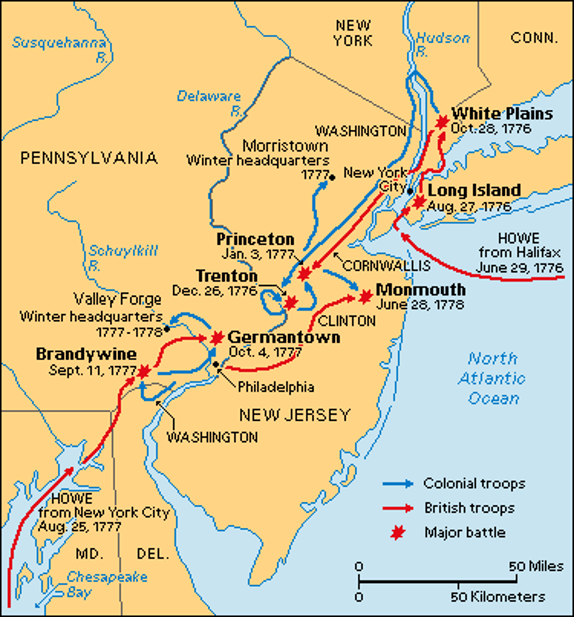
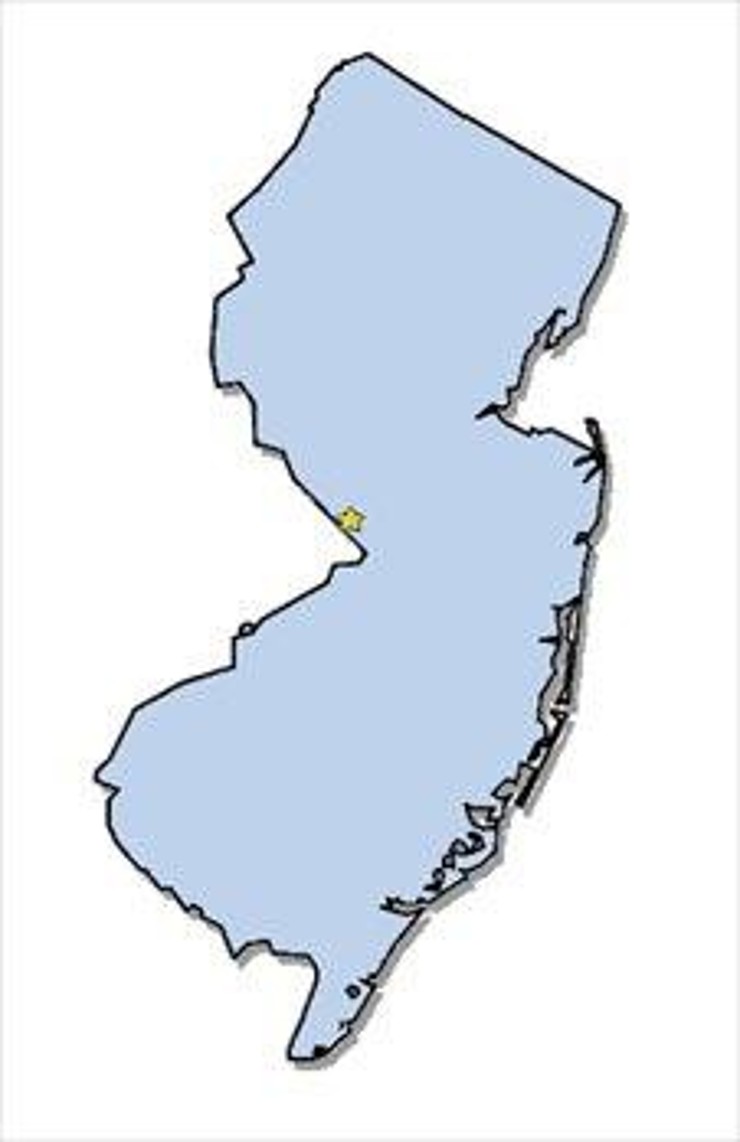
Alternatively, have students consider Handout 6, a map of the Revolutionary War battles in New Jersey or use alternative Handout 6 (a blank map of New Jersey), to draw the lines from the Battle at Fort Lee in 1777 to the Battle of Springfield in 1780. Whichever activity is selected, the goal is for students to appreciate that there were more battles fought across New Jersey than any other state.
Critical image analysis: Washington Crossing the Delaware
Look at Handout 7: Washington Crossing the Delaware River on Christmas eve in 1776, painted by Emanuel Leutze in 1851. The painting is part of the collection of the Metropolitan Art Museum in New York City. You can look at the image attached as Handout 3.
Activity:
- Look at the image carefully and use what you know about winters in New Jersey to assess its accuracy.
- Go to Leutze's Washington Crossing the Delaware - The American Revolution Institute to compare the painting with first-hand diary accounts.
- Identify what is accurate and what is not.
- Why do you think the Emanuel Leutze painted Washington Crossing the Delaware as he did?
Language Arts Activity: Read and discuss George Washington’s Socks
George Washington’s Socks (Woodruff, 1991) is a time travel adventure which puts a group of young boys with Washington in Trenton in winter 1776-77.
Activity:
- Read the book aloud in class or have students read it at
- Have students explain who the Hessians
- Have students list the hardships of
- Have students discuss what it might have been like to have joined George Washington as a colonial soldier in December 1776.
- Go to Ten Crucial Days for a 90-second video about the “Ten Crucial Days” from the NJ 350 website.
- Have students compare the account in the book with that in the
Day Five: How else did New Jersey help in the war effort?
Background: New Jersey’s 100-mile Atlantic coastline, with its many harbors and bays, provided American privateers with safe havens, while thwarting a British naval blockade of New Jersey.
The privateer system established along the Atlantic Seaboard was a great success for the American cause. It disrupted the British merchant fleet, broke the British supply line and resulted in the capture of 16,000 British prisoners. At the same time, it allowed goods and supplies to reach the Continental Army. By 1777, privateers and merchantmen had brought in over 2 million pounds of gunpowder and saltpeter.
Activity: Have students research what a privateer is.
Responses should be that a privateer is an armed ship owned and officered by private individuals holding a government commission and authorized for use in war, especially in the capture of enemy merchant shipping. Privateers differ from pirates in that they are authorized by governments to carry out quasi-military operations.
Background: New Jersey’s natural resources were also important to the American forces. The state of New Jersey had more than 500 farmlands, hillsides and homesteads that provided food for Washington’s Continental Army. New Jersey’s coastal saltmarshes produced salt critical to preserving the vast quantities of food for Washington’s troops. New Jersey also had several ironworks that provided iron and iron products, such as cannon, for the war effort. For example, the Batsto Iron Works, founded in 1766 by Ironmaster Charles Reed, was constructed on the banks of the Batsto River. Iron ore was "mined" from the banks of the streams and rivers, wood from the forests became the charcoal for fuel, and water became the power for manufacturing. During the Revolutionary War years, Batsto Iron Works manufactured supplies for the Continental Army, including items such as cooking pots and kettles.
Other than “Molly Pitcher” who took the place of her husband at the battle of Monmouth after he was injured (Go to Molly Pitcher at the Battle of Monmouth for a short video about “Molly Pitcher”), most patriotic women did not take part in the battles. They supported the war effort other ways. Some supported the war by acting as nurses, such as Ann Cooper Whitall, or provided housing for soldiers, such as Theodosia Ford. Other women supported the war by
acting as spies for the Continental Congress, such as New Jersey’s Patience Lovell Wright. Go to Meet Your Revolutionary Neighbors - Crossroads of the American Revolution to find out more information about these patriotic women and compare their lives.
Activity: What other ways did men and women support the American Revolution?
Have students work in small groups to identify ways that New Jerseyans helped in the war effort other than through fighting in battles, drawing on information from the background information, a map of New Jersey, and information provided by your “Revolutionary Neighbors”. Responses should include: providing food, housing, health care, iron ore for cannons, and information.
Winter encampments in New Jersey

Reconstructed huts at Jockey Hollow (Washington Association New Jersey)
Background: The Continental Army settled into Morristown, NJ, for the winter (January 6-May 28) of 1777 and returned for a second winter at Jockey Hollow, outside of Morristown, Dec. 1, 1779 through June 23, 1780 with 13,000 soldiers. The hills surrounding the camp offered Washington a perfect vantage point from which to keep an eye on the British army, which was headquartered across the Hudson River in New York. Morristown's location also allowed Washington to protect the roads leading from the British strongholds in New Jersey to New England and the roads leading to Philadelphia, where the leaders of the American Revolution were headquartered. The army was protected from attack by the Watchung Mountains and swamplands to the east and the Ramapo Hills which ran north to join the Hudson Highlands.
The winter of 1779-80 was the worst winter of the century and the fighting had greatly reduced the colonial economy. The underfed, poorly clothed and unpaid troops struggled for the first two months to construct their 1000-plus log-house city in the woodlands of Morristown. Over 13,000 men built 14’x16′ log huts designed to house 12 soldiers each. By the end of construction, the soldiers had amassed what would temporarily be one of the ten largest settlements in the colonies.
The entire Pennsylvania Line successfully mutinied, and later 200 New Jersey soldiers attempted also. Some soldiers simply deserted. Though the winter conditions in Jockey Hollow were much more severe than those experienced at Valley Forge nearly two years before, only 100 men died throughout this period due to improvements in camp design and hygiene practices.
Activity: Have students look at Handout 8, Reconstructed huts at Jockey Hollow, and research how the colonial soldiers lived through the winter of 1779-80. Imagine it is January and very cold. What would you do?
Assessment
Have your students write a short opinion essay or oral presentation explaining why New Jersey should be called the “Crossroads of the American Revolution,” supporting their opinion with facts and reasoning.
High scores should reference the New Jersey is called the “crossroads of the American revolution” because:
- the state held a key geographic location between New York and Philadelphia;
- the armies were in or crossing it throughout the war;
- it was heavily involved in the fighting because of its geographic position and the troop movement through the states; and
- New Jersey had more engagements than any other state during the war, closely followed by South Carolina.
Extension
- Visit Lee Historic Park, a cliff-top park area with scenic overlooks, a reconstructed Revolutionary War encampment, and a Visitor Center. The Visitor Center is open Weds.–Sun., 10 AM–4:45 PM, with exhibits, gift shop, 150-seat auditorium, restrooms, beverage vending machine, and a water fountain. It is closed on holidays except Memorial Day, Independence Day, and Labor Day. Living history school program is offered and special events. Contact 201 461-1776 or Fort Lee Historic Park
- Visit Washington’s Crossing in Titusville, Washington Crossing State Park includes the site of the landing at Johnson's Ferry and the Johnson's Ferry House. For information go to Washington Crossing State Park - State Parks, Forests & Historic Sites
- Visit the Old Barracks in Trenton Barracks, a fieldstone structure built in 1758 during the Seven Years' War and used by both sides during the American When General Washington attacked Trenton, there was skirmishing around the building against the Hessian troops stationed within. After defeating the Hessians, the Americans used the Barracks as a hospital. It was occupied at different times during the war by American, British, and Hessian troops as well as loyalist refugees and prisoners. For information go to Old Barracks Museum
- Visit Princeton Battlefield Park which preserves part of the site of the Princeton Battlefield Society Princeton Battlefield Society (January 3, 1777), which was a victory for General George Washington's revolutionary forces over British forces. The park also includes the Clarke House Museum Thomas Clark: Princeton; the site of the Mercer Oak, a tree which stood in the middle of the battlefield until recent years; the Ionic Colonnade and a stone patio marking the grave of 21 British and 15 American soldiers killed in the battle. The park's hiking trails lead to the Delaware and Raritan Canal and to Princeton The park is open daily sunrise to sunset. Contact 609-921-0074.
- Visit Jockey Hollow where Washington’s troops camped during the winter of 1779-1780, and/or the Ford Mansion, which served as Washington’s Headquarters for six months during the American Revolutionary War. Jockey Hollow, Fort Nonsense and the Jacob Ford Mansion were of importance during the American Revolution. Today they are part of the Morristown National Historical Park, created in 1935 as the nation's first national historical park in Morristown, NJ, and operated by the National Park Service. The Jockey Hollow Section is free; Washington's Headquarters/Jacob Ford Mansion at Morristown charges an admission fee. For information go to Jockey Hollow - Morristown National Historical Park (U.S. National Park Service)
- Visit Monmouth Battlefield State Park in Manalapan, New Open daily 9 a.m. to 4 p.m. (732) 462-9616. Monmouth Battlefield State Park - State Parks, Forests & Historic Sites: There is a reenactment of the Battle of Monmouth every year at the park in late June, including pacing sentries, enlisted men cleaning their weapons or idle away their time gambling, and women of the army cooking, mending, and washing.
- Visit the Battle of Connecticut Farms (Connecticut Farms and Springfield Battle Facts and Summary | American Battlefield Trust) in Union, New Jersey, where an invading force of 5000 British and Hessian troops moving from Elizabeth to Morristown fought the Continental Army and New Jersey Militia forces. Some of the heaviest fighting took place around the area of the Presbyterian Church. The original church building was burned that day along with much of the Village of Connecticut Farms by British/Hessian forces. The cemetery at the Connecticut Farms Presbyterian Church contains the graves of 72 American Revolutionary War soldiers as well as a mass grave of British and Hessian soldiers who died at the Battle of Connecticut Farms. The church was soon rebuilt both, and the ‘new’ building still stands today at 888 Stuyvesant Avenue in Union, with a plaque commemorating the battle, which is reenacted.
- Visit the Battle of Springfield in Springfield, New Jersey. Continental troops and New Jersey Militia successfully defended against the attack and kept the invasion from reaching Washington's supplies at Morristown. However, the British and Hessian forces burned most of the buildings in Springfield, including the Presbyterian Church on Morris Avenue in Springfield that was being used as a The Battle of Springfield was the last major battle fought in the North. The Cannon Ball house, so-named because it had been hit by a cannon ball during the battle, was one of only four houses in Springfield to survive unburned and the only one open to the public. For more information about the Cannon Ball House, the Presbyterian Church and graveyard in Springfield, go to Battles of Connecticut Farms and Springfield - Crossroads of the American Revolution. For an amazing video on the event, go to: How well do you know the Battle of Connecticut Farms? | Historically Correct
- Visit Batsto Village, the site of a former bog iron and glass-making community in Wharton State Forest in Hammonton, NJ 08037 Phone: 609.561.0024 School Group Contact: Gil Mika, (609) 561-0024. Email:
This email address is being protected from spambots. You need JavaScript enabled to view it. or go to the website at batstovillage.org. There is a full-time naturalist on staff conducts natural history programs for school groups.
Handout 1: Mercantilism
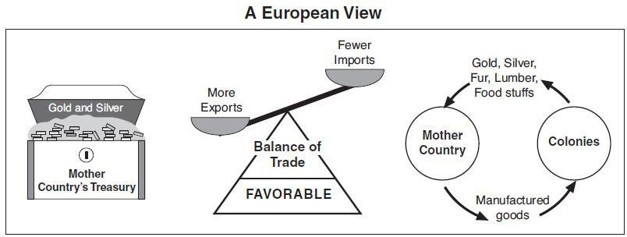
Although Britain had been less controlling with its colonies than Spain, Portugal, the Netherlands or France, it still exercised mercantilistic polices with its American colonies:
- Goods bound for colonies had to go to England first for duties
- Colonists were not allowed to manufacture certain products to not compete with British
- High tariffs, especially on manufactured goods
- Colonists not allowed to trade directly with other nations
- The British colonies were moneymakers for the mother
- As colonies grew and prospered limitations felt more
Who benefitted most from these requirements?
Handout 2: Mercantilism versus Capitalism
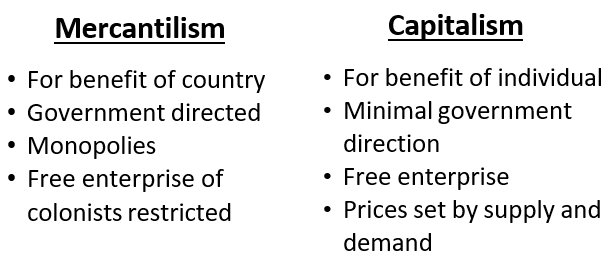
Mercantilism
- For benefit of country
- Government directed
- Monopolies
- Free enterprise of colonists restricted
Capitalism
- For benefit of individual
- Minimal government direction
- Free enterprise
- Prices set by supply and demand
Handout 3: The Proclamation Line, 1763
Handout 4: Taxation
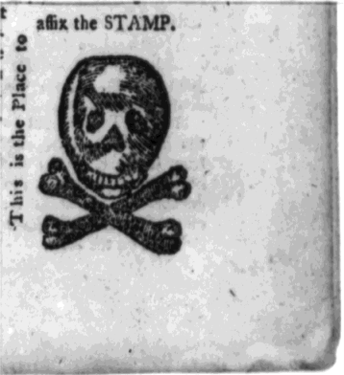
- In 1765 the British Parliament proposed a Stamp Act. It required that everyone, including the North American colonists, purchase and use revenue stamps on legal documents, newspapers, books, liquor licenses and other purchases.
- The Colonists saw this as an unfair interference with their rights and responded by refusing to purchase British goods (non-importation = boycott).
- The Stamp Act was repealed by Parliament in 1766
- Townsend duties introduced instead in 1767 on paper, lead, paint and tea
- Colonists again responded with petitions and nonimportation agreements and duties failed to bring money into British treasury
- 1770 all duties repealed except for tax on tea
Handout 5: Timeline
List the Battles and Encampments of the American Revolution
Highlight those that took place in New Jersey in red
| Year | Date | Event and outcome |
|
1775 |
Apr. 19 May 10 June 16 Dec. 31 |
Fighting begins at Lexington and Concord, MA Siege of Ft. Ticonderoga, NY Battle of Bunker (Breeds) Hill, Charlestown, MA Battle of Quebec, Quebec Province (Canada) |
|
1776 |
July 3 July 4 July 12 Aug. 27 Oct. 28 Nov. 16 Nov. 20 Nov. 20-Dec. 7 Dec. 24 Dec. 26 |
Washington takes command of the army besieging Boston, MA Continental Congress approves the Declaration of Independence British begin landing 3,000 troops on Staten Island, NY British win Battle of Long Island, NY Battle of White Plains, NY Battle of Washington Heights, NY British successful at Battle of Ft. Lee, NJ Washington’s army retreats across NJ to PA Washington crosses the Delaware from PA to NJ Washington wins the first Battle of Trenton, NJ |
|
1777 |
Jan. 2-3 Jan. 6-May 28 Jan. 20 Apr. 13 June 25-27 Aug. 25 Sept. 11 Sept. 19 Sept. 26 Oct. 4 |
Washington wins Battle of Princeton, NJ Main Continental army encamped at Morristown, NJ Battle of Millstone (near present day Manville), NJ—British foraging party driven off by forces composed mostly of NJ militia Battle of Bound Brook, NJ—Surprise attach by British routed Continental outpost garrison British fail to destroy the Continental Army at the Battle of Short Hills, NJ Main British Army sails from New York to attack Philadelphia Battle of Brandywine, PA Battle of Saratoga, NY British occupy Philadelphia, PA Battle of Germantown, PA Continental Army encamps at Valley Forge, PA |
|
1778 |
Thru June 18 June 28 Dec. 11-June 3 Dec. 29: |
Continental Army encamped at Valley Forge, PA Continental Army wins the Battle of Monmouth, NJ Main Continental Army encamped in Middlebrook (Bridgewater), NJ British capture Savannah, GA |
|
1779 |
June 12-Sept. 30 Aug. 19 Dec. 1 Dec. 5 |
Successful Continental campaign against the Iroquois Battle of Paulus Hook (Jersey City), NJ—fort remained in British hands for duration of war guarding New York harbor Main Continental Army moves to Morristown, NJ--endures harsh winter British sail to invades Carolinas with 8,000 men |
|
1780 |
Through June 23 May 12 June 7 June 23 Aug. 16 |
Main Continental Army encamped at Morristown, NJ British capture Charleston, SC Battle of Connecticut Farms (Union), NJ—Continentals forced to retreat but stopped British advance British attach on Morristown stopped at Battle of Springfield, NJ British defeat Army at Camden, SC |
|
1781 |
Jan. 17 March 15 Oct. 9 Oct. 19 |
Continental destroy British detachment at Cowpens, SC British win Guilford Courthouse, SC with heavy casualties British defeated at Battle of Yorktown, VA British surrender at Yorktown, VA |
|
1782 |
||
|
1783 |
Nov. 26 |
British evacuate New York City |
|
1784 |
Jan. 4 |
U.S. Congress ratifies Treaty of Paris |
Handout 6: Map of Revolutionary war battles in New Jersey
Alternative Handout 6: Map of New Jersey
Handout 7: Washington Crossing the Delaware, December 24, 1776
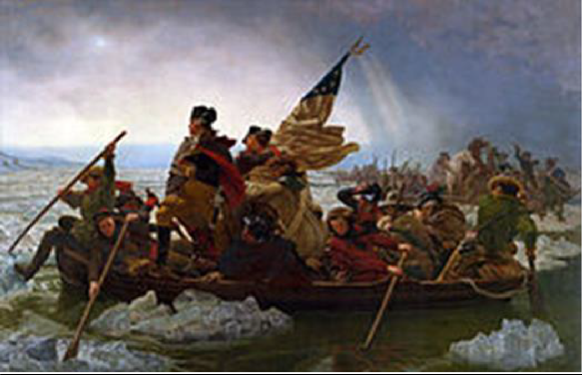
Washington Crossing the Delaware by Emanuel Leutze (1851) at the Metropolitan Museum of Art
Handout 8: Jockey Hollow, Morristown

Reconstructed huts at Jockey Hollow (Washington Association New Jersey)
New Jersey: The Garden State
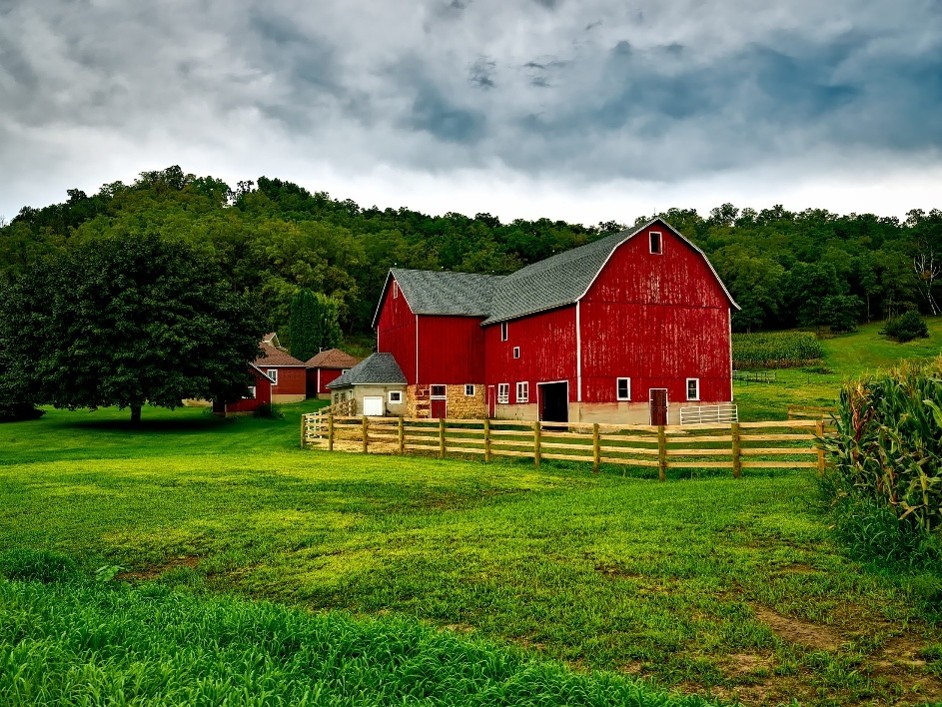
Lesson Creator: New Jersey Center for Civic Education, Rutgers University, Piscataway, NJ
Grade Level: Elementary
Objectives: Students will be able to:
- Identify factors that make New Jersey conducive to agriculture and food production
- Explain the impact of location and transportation on food production
- Identify food products that are grown in New Jersey
- Take a stand and support your position on whether New Jersey should continue to be called the “Garden State”
New Jersey Student Learning Standards for Social Studies:
6.1.5.GeoPP.2: Describe how landforms, climate and weather, and availability of resources have impacted where and how people live and work in different regions of New Jersey and the United States
6.1.5.GeoHE.1: Use a variety of sources from multiple perspectives, including aerial photographs or satellite images to describe how human activity has impacted the physical environment during different periods of time in New Jersey and the United States.
6.1.5.GeoHE.2: Cite examples of how technological advances have changed the environment in New Jersey and the United States (e.g., energy, transportation, communications)
6.1.5.EconEM.4: Compare different regions of New Jersey to determine the role that geography, natural resources, climate, transportation, technology, and/or the labor force play in economic opportunities
6.1.5.EconNE.3: Describe how the development of different transportation systems impacted the economies of New Jersey and the United States.
6.1.5.EconNE.4: Explain how creativity and innovation resulted in scientific achievement and inventions in many cultures during different historical periods.
6.1.5.EconGE.2: Illustrate how production, distribution, and consumption of goods and services are interrelated and are affected by the global market and events in the world community.
6.1.5.HistoryCC.9: Evaluate the impact of ideas, inventions, and other contributions of prominent figures who lived New Jersey.
6.3.5.CivicsPD.3: Propose a solution to a local issue after considering evidence and the perspectives of different groups, including community members and local officials
6.3.5.GeoHE.1: Plan and participate in an advocacy project to inform others about the impact of climate change at the local or state level and propose possible solutions.
Anticipatory activity
Ask students: Where does the food that you eat come from? Then discuss.
Our food comes from all around the globe, but some of it is grown right here on farms in New Jersey. Even today, agriculture remains a key part of New Jersey’s economy and identity.
Ask students which food they think are grown in New Jersey? Then discuss.
New Jersey produces blueberries, cranberries, peaches, corn and tomatoes, often ranking among the top 10 U.S. producers for each. Hammonton is known as the “Blueberry Capital of the World.” And the Jersey Pine Barrens are famous for cranberry bogs.
The State Fruit: The Blueberry!
The blueberry is, in fact, the State Fruit of New Jersey. Elizabeth Coleman White developed the nation's first cultivated blueberry in Whitebog, New Jersey (See Innovations from New Jersey). The blueberry became the official state fruit in 2004. In 2003, fourth graders at Veteran's Memorial Elementary School in Brick campaigned to make the blueberry the official state fruit. The students had their idea introduced as legislation and conducted a lobbying campaign to see its passage, including media interviews, a letter and petition drive, presentations to local governing bodies, and a trip to the state's blueberry festival in Whitesbog. In addition, the classes traveled to Trenton to make presentations before Senate and Assembly Committees.
Ask your students to explain why the blueberry should be New Jersey’s state fruit? Responses might include the following:
- The blueberry industry significantly contributes to New Jersey's economy.
- New Jersey is one of the top producers of blueberries in the United States.
- The fruit is native to North America, with a long history in the region.
- Blueberries are recognized for their health benefits and nutritional value.
- The designation promotes agricultural awareness and local farming initiatives.
- The blueberry is celebrated in various festivals and events throughout the state.
What makes New Jersey good for agriculture?
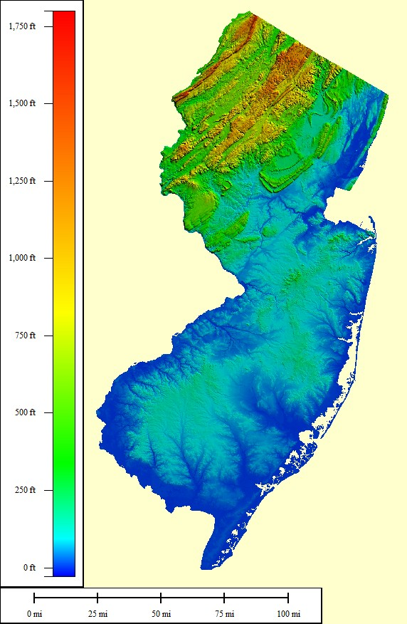
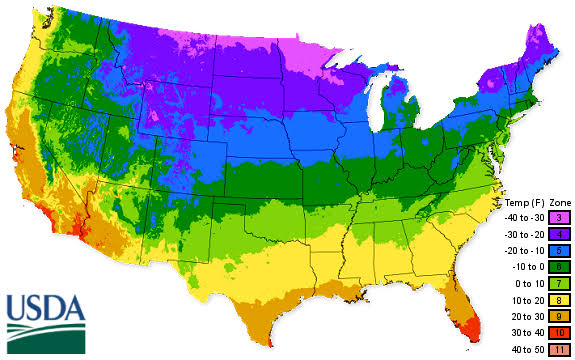
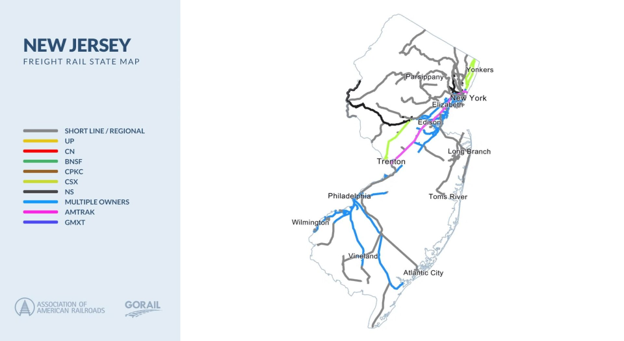
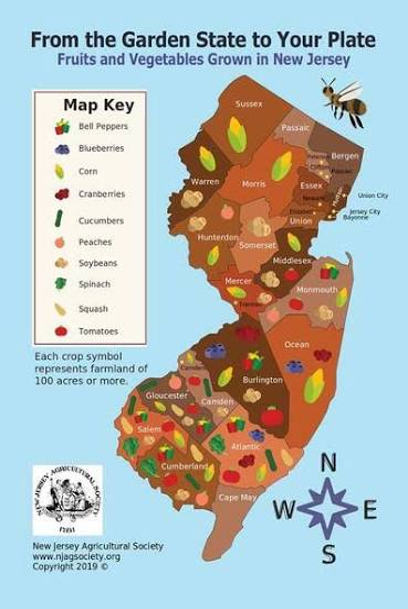
Show students Handout #1 (Topographical map of New Jersey) and have them identify what might make New Jersey good for agriculture. Then have students consider Handout #2 (a chart of climates in New Jersey and other parts of the country) as well as Handout #3 (transportation by water, rail and road) and have them identify which factors help encourage agriculture in New Jersey. Students should use Handout #4 to identify the most common crops grown in New Jersey. They should conclude that the fertile land, mild climate and extensive transportation network all encouraged the use of the land for agriculture in New Jersey.
The Garden State
Underscoring its agricultural history, New Jersey obtained the nickname, the “Garden State”. In 1876, during the U.S. Centennial Exhibition in Philadelphia, Abraham Browning, a prominent Camden attorney and former Attorney General of New Jersey, described New Jersey as a “garden between two great cities—New York and Philadelphia. He said that both cities “ate out of New Jersey’s basket” of fresh produce, dairy and other farm goods. The nickname stuck and was officially recognized as the state slogan in 1954 when the New Jersey legislature passed a bill adding “The Garden State” to license plates.
Although there were over 34,000 farms in New Jersey according to the census in 1900, comprising more than 57% of the state’s total land mass, today only approximately 10,000 farms remain, comprising only 16% of the land area of the state.
Ask your students: Do you think that New Jersey should still be called “The Garden State” to reflect its history or should it change its nickname since farming is no longer the main use of land in the state?
Extension: Encourage your students to go to the annual Blueberry Festival in Whitesbog https://festivalnet.com/13712/Browns-Mills-New-Jersey/Festivals/Whitesbog-Blueberry-Festival or to visit one of the many fruit and vegetable stands along the New Jersey roads.
Handout #1: Topographical map of New Jersey
Handout #2: Climate Comparisons
Handout #3: Transportation – Freight Rail, Roads
Handout #4 - New Jersey Agricultural Produce Map
New Jersey’s Railroads: Yesterday and Today
 |
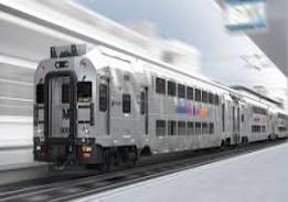 |
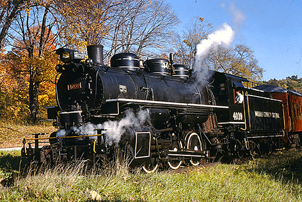
| Old Steam Railroad train | Electric Railroad train |
Grade Level: Elementary
Objectives:
Students will be able to
- explain how a steam engine works
- compare and contrast inventors James Watt and John Stevens
- know about the development of railroads across New Jersey impacted the economies of New Jersey and the United States.
New Jersey Student Learning Standards for Social Studies (2020):
6.1.5.CivicsPI.1: Describe ways in which people benefit from and are challenged by working together, including through government, workplaces, voluntary organizations, and families.
6.1.5.GeoPP.2: Describe how landforms, climate and weather, and availability of resources have impacted where and how people live and work in different regions of New Jersey and the United States.
6.1.5.GeoPP.3: Use geographic models to describe how human movement relates to the location of natural resources and sometimes results in conflict.
6.1.5.GeoHE.2: Cite examples of how technological advances have changed the environment in New Jersey and the United States (e.g., energy, transportation, communications).
6.1.5.GeoGI.1: Use multiple sources to evaluate the impact of the movement of people from place to place on individuals, communities, and regions.
6.1.5.GeoGI.2: Use historical maps to explain what led to the exploration of new water and land routes.
6.1.5.EconET.2: Use quantitative data to engage in cost benefit analyses of decisions that impact the individual and/or community.
6.1.5.EconET.3: Explain how scarcity and choice influence decisions made by individuals, communities, and nations.
6.1.5.EconNM.2: Use data to describe how the availability of resources in New Jersey and other regions in the United States have impacted economic opportunities.
6.1.5.EconNM.3: Describe how the development of different transportation systems impacted the economies of New Jersey and the United States.
Common Core ELA Standards
RI.4.3 Explain events, procedures, ideas, or concepts in a historical, scientific, or technical text, including what happened and why, based on specific information in the text.
RI.4.4 Determine the meaning of general academic and domain specific g of general academic and domain-specific words or phrases in a text relevant to a grade 4 topic or subject area.
RI.4.5 Describe the overall structure (e.g., chronology, comparison, cause/effect, problem/solution) of events, ideas, concepts, or information in a text or part of a tex
W.4.1 Write opinion pieces on topics or texts, supporting a point of view with reasons and information.
W.4.2 Write informative/explanatory texts to examine a topic and convey ideas and information clearly.
W.4.7 Conduct short research projects that build knowledge through investigation of different aspects of a topic.
SL.4.1 Engage effectively in a range of collaborative discussions (one-on-one, in groups, and teacher-led) with diverse partners on grade 4 topics and texts, building on others' ideas and expressing their own clearly
SL.4.4 Report on a topic or text, tell a story, or recount an experience in an organized manner, using appropriate facts and relevant, descriptive details to support main ideas or themes; speak clearly at an understandable pace.
Essential Questions:
- Why did railroads develop and expand?
- How did railroad transportation change the economy of New Jersey?
Vocabulary and Warm-up:
- Have you ever been on a train?
- Where did you go? To New York, Philadelphia, Boston, Washington, D.C., Newark.
- How many people were on your train?
- What other ways could you get to your destination? Cars, buses and airplanes
- How do railroads differ from cars and buses? They have fixed directions and schedules. Buses and cars move on highways and roads and can change directions.
- What are the benefits of traveling by train?
Vocabulary (Suggested definitions in italics):
- What is a train or railroad? (A means of moving people and goods, by way of wheeled vehicles running on rails where vehicles merely run on a prepared surface, rail vehicles are also directionally guided by the tracks on which they run.)
- What is a track? (A railroad track usually consists of steel rails installed on ties on which the “rolling stock”, usually fitted with metal wheels, moves.)
- What is “Rolling stock”? (“Rolling stocks” are the railroad cars that can be coupled - connected together - and uncoupled.)
- What is an “Iron Horse”? (“Iron horse” was an early name for railroads.)
- What is “Horsepower”? (“Horsepower” is a way to measure the rate of work accomplished by steam and later other engines as compared with what a horse could do. For example, the average automobile has 110-150 horsepower or the power of 110-150 horses.)
- What is a “steam engine”? (A steam engine is the result of boiling water to produce mechanical motion, which is used in locomotives, automobiles, trucks, and other machines.)
“The Iron Horse”
Historical Background:
The oldest railways date back to the 6th century B.C. in Greece and were pulled by men. Later horses were used to draw carriages that were coupled (connected) to carry more people and/or goods. The width of the rail was originally based on the width of the Roman Chariot and the first ‘coaches’ were altered stagecoach bodies. Rail transport blossomed after Scottish engineer James Watt (1736-1819) patented a steam engine in 1781 that produced continuous motion. Watt invented the term “horsepower” to compare the output of steam engines with the power of draft horses. Early railroads were called “The Iron Horse” because they were made of metal and did the work that had previously been done by horses.

Early steam engine locomotive
Procedures/Activity: How does a steam engine work?
Share Handout 1: “How Do Steam Engines Work.” Then have students answer the following questions:
- How does a steam engine work?
- Where does the “choo-choo” sound of a locomotive come from?
- What other ways were steam engines used in the 19th and 20th centuries and today? (Possible answer: Steamboats, steam pushing pistons and pulleys for manufacturing,)
Procedures/Comparing Inventors Activity: John Stevens (1749-1838) and James Watt (1736-1819) were both interested in developing the use of steam engines. Have students conduct research (or use the information provided below) and complete Handout 2: Graphic Organizer, which compares John Steven and James Watt. Or prepare a short essay comparing their backgrounds and accomplishments. Essays should note the similarities:
- Both came from prominent families, had excellent educational backgrounds and were curious tinkerers
- Their inventions were practical and had an enormous impact on the improvement of transportation during the early 19th
- Institutions of higher learning were established in their names.
Students should use the graphic organizer, Handout 1, to help them organize their comparison of the two inventors. (Teachers may also read the following paragraphs and determine how to best share additional background with their students.)
James Watt was born in a Scottish seaport on the Firth of Clyde in 1736. His father was a shipwright, ship owner and contractor, and served as a civic officer for the town. His mother came from a distinguished family and was well educated. When he was eighteen, his mother died and his father's health began to fail. Watt travelled to London to study instrument-making for a year, then returned to Scotland, settling in the major commercial city of Glasgow intent on setting up his own instrument-making business. Although steam engines had been in use for more than 50 years, they weren’t very workable. In 1765, Watt realized that too much heat was being lost in the process and developed a model of a more efficient steam engine that provided more steam to perform work. Watt had a working model later that same year and a patent for it by 1781. Watt Memorial Library was begun in 1816 with Watt's donation of scientific books, and developed as part of the Watt Institution by his son, which ultimately became the James Watt College, now part of West College Scotland. For additional information read James Watt - Kids | Britannica Kids | Homework Help; or view James Watt's Steam Engine and https://www.youtube.com/watch?v=TA4eW9cA8H0.
John Stevens was born in Perth Amboy, New Jersey, in 1749. His father was a prominent state politician who served as a delegate to the Continental Congress, and his mother, Elizabeth Alexander, was the daughter of a New York lawyer and statesman. Stevens graduated from King's College (now Columbia University) in 1768. At age 27 he was appointed a captain in Washington's Continental army and was afterwards treasurer of New Jersey. In 1784, he bought land that had been confiscated from a Tory (Loyalist) landowner at a public auction from the state of New Jersey. His land purchase comprised approximately what is now the city of Hoboken. Stevens was a lawyer, engineer and inventor. He constructed the first U.S. steam locomotive, the first steam-powered ferry, the Phoenix, in 1806. On June 10, 1809, the steamship Phoenix left Hoboken on a trip down the Atlantic Ocean along the coastline of New Jersey and then up the Delaware River to Philadelphia. It was the first steamship to successfully navigate open ocean. Stevens also initiated the first U.S. commercial ferry service from in 1811 from Hoboken, NJ to New York City, NY. He obtained the first railroad charter in 1815 and designed and built a steam locomotive capable of hauling several passenger cars in 1825. He also helped to develop U.S. patent law. Stevens built an estate at Castle Point in Hoboken, on land that was given by his son to create Stevens Institute of Technology in 1870. For additional, view John Stevens Locomotive (youtube.com) or read John Stevens - Students | Britannica Kids.
John Stevens and James Watt
|
James Watt |
John Stevens |
|
|
Birth date and place |
Island of Firth, Scotland 1736 |
Perth Amboy, NJ 1745 |
|
Families |
Father a civic leader Mother from a distinguished family and well-educated |
Father a prominent statesman Mother from a distinguished family |
|
Eduational Background |
Well educated |
Graduated from a prestigious university |
|
Accomplishments |
Developed and patented in 1781 a workable steam engine |
Constructed the first U.S. steam locomotive, and the first steam-powered ferry, the Phoenix in 1806, and the first U.S. commercial ferry service in 1811 from Hoboken, NJ to New York City, NY. Obtained the first railroad charter in 1815 and designed and built a steam locomotive capable of hauling several passenger cars in 1825. Helped to develop U.S. patent law. |
|
Legacies |
Watt Memorial Library, now part of West College in Scotland |
Stevens Institute of Technology in Hoboken, NJ |
|
Other information |
The Development of Mainline Railroads
Historical Background:
With steam engines, it was possible to construct mainline railways, which were a key component of the industrial revolution. Railways reduced the costs of shipping and allowed for fewer lost goods when compared to shipping over water. The change from canals to railways allowed for "national markets" in which prices varied little from city to city. Watt’s steam engine also enabled a wide range of manufacturing machinery to be powered since the engines could be placed anywhere that water and coal or wood fuel was available.
The first government charter for a railroad in the United States was issued by New Jersey in 1815 for the New Jersey Railroad Company to “erect a railroad from the river Delaware near Trenton, to the river Raritan, at or near New Brunswick,” as proposed by John Stevens. However, the proposed railroad was never built due to the inability to attract financial investors. The first commercial railroad started operations in 1826 in Massachusetts. In 1830, the Baltimore and Ohio (B&O) Railroad Company built the first American steam locomotive. The B&O Railroad was one of the first commercial lines in the world and it was enormously successful. In 1832, New Jersey’s Camden and Amboy Railroad, a component of the recently formed “Joint Companies” rail and canal transportation monopoly, began operating freight trains in New Jersey with a steam engine locomotive. In 1836, the Morris and Essex Railroad began passenger service between Morristown and Orange with a horse-drawn car making two trips a day for a fifteen cent fare each way.
The railroads were soon putting the canals that had been built in the 1820s and 30s out of business because they were so much faster. For example, it took 5 days to ship coal by the Morris Canal across northern New Jersey as compared to 8 hours by rail. By the end of the 19th century, commercial traffic on the Morris Canal had become negligible. In 1923, the State of New Jersey took possession of the canal and formally abandoned it in 1924. The Delaware and Raritan (D&R) Canal was one of America’s busiest navigation canals during the 1860s and 70s when it carried coal from Pennsylvania to feed the industrial boom in New York and New Jersey. By the end of the 19th century, use of the D&R Canal declined as it was unable to compete with the power and speed of the railroads. The D&R Canal’s last year of operation at a profit was 1892. It stayed open through 1932 when the State of New Jersey took it over and rehabilitated it to serve as a water supply system. For more information, see the Canal Transportation in New Jersey lesson.
Activity: Compare canal and rail transportation and how it impacted the economies of NJ and the U.S. (suggested answers bulleted in italics):
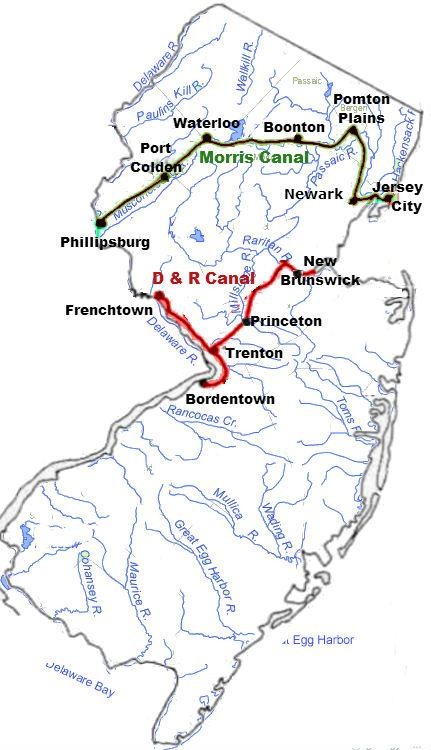
- Compare Handout 3: Railroad Map of New Jersey (1869) with Handout 4: Canal Map of New Jersey (1834).
- Place your finger on one of the railroad lines and take a “finger trip” throughout the states. Describe the many different places that you could travel to by railroad in the 1860s.
- Students may use the graphic organizer Handout 5 to help them organize their facts.
- Which system had more access to various towns and areas of New Jersey?
- The railroads. Nearly every major city was linked by railroad.
- What advantages did railroads have that canals lacked?
- Canals and rivers were unavailable in the winter season due to freezing, but the railroads ran year-round despite poor weather.
- Railroads were safer: the likelihood of a train crash was less than the likelihood of a canal barge sinking. A “barge” is a flat-bottomed boat for carrying freight, typically on canals and rivers, either under its own power or towed by animal power (typically a mule).
- Travel by rail was faster than travel by water. For example, it took 5 days to ship coal by the Morris Canal across northern New Jersey as compared to 8 hours by rail.
- The railroads provided cost-effective transportation because they allowed shippers to have a smaller inventory of goods, which reduced storage costs during winter, and to avoid insurance costs from the risk of losing goods during transit
- How did these new transportation systems help transition New Jersey from an agricultural to an industrial society?
- Trains allowed more goods and people to be moved to a greater number of places more quickly, helping to expand the marketplace from local to regional.
Comparison of New Jersey's Canals and Railroads, c. 1869
|
Railroads |
Canals |
|
|
Which system had more access to various towns and areas of New Jersey? |
Trains do not need to be on water so they can be built anywhere and therefore can be closer to more places. Nearly every major town in New Jersey was linked by railroad. |
The two canals only linked across the states from Jersey City to Philipsburg (Morris Canal) and from New Brunswick to Trenton (D&R Canal) |
|
Which system of transportation was faster? |
Trains are faster. Trains could do in 8 hours what it took canals 4 days. |
Barges on the canals moved at the pace that mules could pull them. |
|
Which system of transportation was safer? |
Trains are less likely to have accidents than boats. |
Barges on canals are subject to sinking. |
|
Which system of transportation costs less? |
Since trains could carry more people and goods and travel faster, they were more cost efficient than using boats on canals. |
Barges on canals had limited capacity and traveled slowly, making them less cost efficient. |
|
Which system was more limited by the weather? |
Trains can travel in any kind of weather |
Boats can’t travel on canals in the winter when water is frozen. |
|
Other questions? |
The Expansion and Consolidation of Railroads in New Jersey
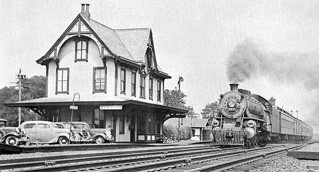
Skillman, NJ train station, 1893-1938
The railroad industry quickly expanded. The Pennsylvania Railroad (PRR), founded in 1846, began with service between Harrisburg and Pittsburgh but rapidly expanded. The Central Railroad of New Jersey (CNJ) began with a line between Elizabeth and Somerville in 1846 and then extended westward to Phillipsburg and east to Jersey City, gradually acquiring other branches, to the south and southwest. In the 1880s, electrified trains were introduced, and rapid transit systems came into being.
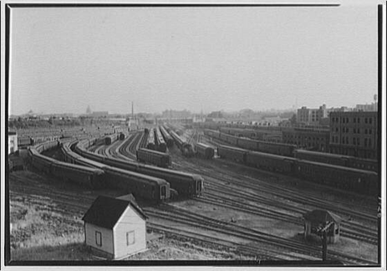
Railroad yard, ca 1920
The biggest hindrance to growth in New Jersey was the lack of direct rail access to New York City. The PRR began work on two tunnels under the Hudson River in 1902 that was completed in 1910. The tunnels served the new Pennsylvania Station. By 1920, the railroad was running hourly service through New Jersey between New York City and Washington D.C. Most of the railroads operated both freight and passenger services, with freight service proving to be the more profitable of the two. Because of New Jersey’s close proximity to Pennsylvania, the principal commodity transported for most of the railroads was coal. The large passenger rail network that existed at the turn of the twentieth century was mostly due to the success of the freight rail industry.
Railroad yard, ca 1920
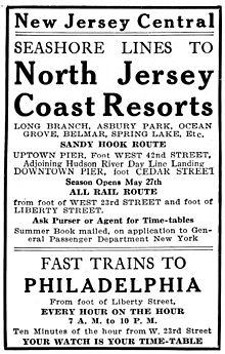
1915 CNJ ad for service from New York
New Jersey’s Railroads Today
With the advent of improved paved roads, trucking businesses had become major competitors to transporting freight by rail by the 1930s. As the Interstate Highway System was developed in the 1950s, trucks increased their market share of freight business. Railroads continued to carry bulk freight such as coal, steel and other heavy commodities. Many passenger railroads were driven out of business due to competition from highways and airlines.
The Penn Central Railroad filed for bankruptcy in 1970. The National Railroad Passenger Corporation, commonly known as Amtrak, was established in 1971 to relieve the freight railroads of their intercity passenger rail obligations. Conrail, a quasi-private freight rail operator, took over operations of the bankrupt freight lines, with support from the federal government. Maintenance and responsibility of the Northeast Corridor was assigned to Amtrak, but Conrail provided the freight and commuter service.
Since 1983 each state in the Northeast has provided commuter rail service. New Jersey Transit Rail Operations, the rail division of New Jersey Transit, is the state-run agency that provides commuter rail service in New Jersey. There are 11 railroad lines across New Jersey, most of them providing transportation to and from New York City, Hoboken, and Newark, with one line running between Atlantic City and Philadelphia. Today most of the trains in New Jersey are electrified but some are powered by diesel fuel. New trains are dual powered, meaning they can run on diesel or electricity.
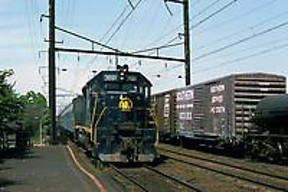
Electrified New Jersey Coast Line train in Elizabeth, 1976
Assessment: How have the railroads in New Jersey changed from the 1800s to today?
Students write a short essay. Good scores should include recognition of competition from cars, buses and trucks on roads as well as airlines. Also change in source of power from steam to diesel to electric. High scores should include reference to how the technology and greater expansion of roads and airlines have reduced the use of railroads in the mid-20th century much as railroads largely replaced canal and other water transportation in the second half of the 19th century.
Extension
What do you like best about riding a railroad train? Why? If most students have not taken a train:
- Take students to the Whippany Railway Museum where they can ride vintage For more information call 12-4 p.m. (973) 887-8177or go to Whippany Railway Museum
- Or the New Jersey Museum of Transportation in Allaire State Park. For information go to Pine Creek Railroad
Or the United Railroad Historical Society of New Jersey. For more information go to United Railroad Historical Society of New Jersey
Handout 1
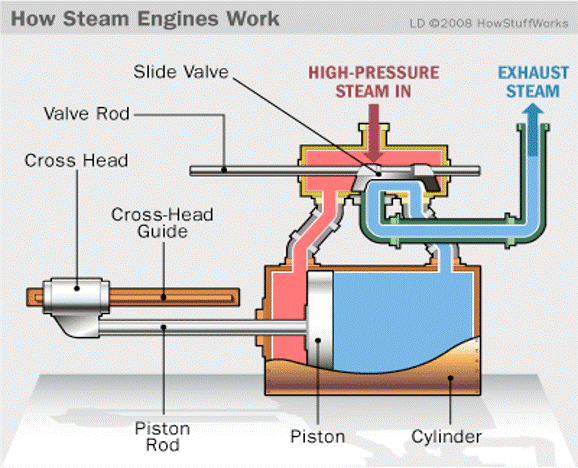
Piston Steam Engine typical in steam locomotives
Handout 2
John Stevens and James Watt
|
James Watt |
John Stevens |
|
|
Birth date and place |
||
|
Families |
||
|
Educational Background |
||
|
Accomplishments |
||
|
Legacies |
||
|
Other information |
Handout 3
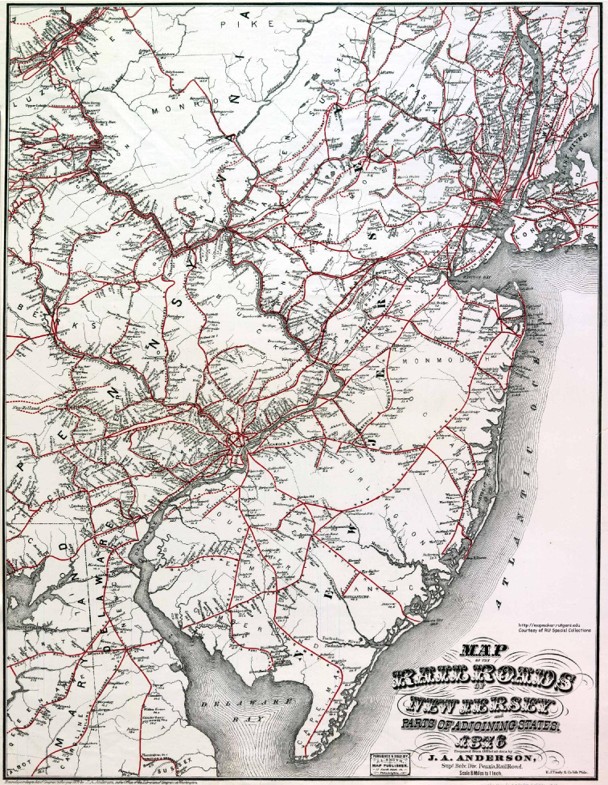
Map of Railroads in New Jersey, 1876 at https://geography.rutgers.edu/images/NJ_Historical_Maps/RAILROADS/NJ_RR_1876.jpg
Handout 4
Morris (green) and D&R (red) Canals
Handout 5
Compare Railroad Map of New Jersey (1869) and Canal Map of New Jersey (1834)
|
Railroads |
Canals |
|
|
Which system had more access to various towns and areas of New Jersey? |
||
|
Which system of transportation was faster? |
||
|
Which system of transportation was safer? |
||
|
Which system of transportation costs less? |
||
|
Which system was more limited by the weather? |
||
|
Other questions? |
New Jersey’s Legislature
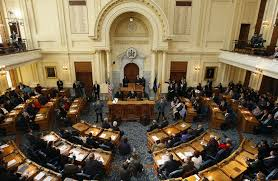
New Jersey State Assembly Chamber, Trenton, NJ
Lesson Creator: New Jersey Center for Civic Education, Rutgers University, Piscataway, NJ
Grade Level: Elementary
New Jersey Core Content Social Studies Standards
6.1.5.CivicsPI.1: Describe ways in which people benefit from and are challenged by working together, including through government, workplaces, voluntary organizations, and families.
6.1.5.CivicsPI.3: Explain how the United States functions as a representative democracy and describe the roles of elected representatives and how they interact with citizens at local, state, and national levels.
6.1.5.CivicsPI.4: Describe the services our government provides the people in the community, state and across the United States.
6.1.5.CivicsPI.5: Explain how government functions at the local, county, and state level.
6.1.5.CivicsPD.1: Describe the roles of elected representatives and explain how individuals at local, state, and national levels can interact with them.
6.1.5.CivicsPD.2: Explain how individuals can initiate and/or influence local, state, or national public policymaking (e.g., petitions, proposing laws, contacting elected officials).
6.1.5.CivicsPR.1: Compare procedures for making decisions in a variety of settings including classroom, school, government, and /or society.
6.1.5.CivicsPR.4: Explain how policies are developed to address public problems.
6.1.5.EconET.1: Identify positive and negative incentives that influence the decisions people make.
Common Core ELA Standards
RI.5.1 Quote accurately from a text when explaining what a text says explicitly and when drawing inferences from the text.
RI.5.4 Determine the meaning of general academic and domain-specific words and phrases in a text
W.5.2 Write informative/explanatory texts in which they introduce a topic. Use facts and definition to develop points and provide a concluding statement
W.5.7 Participate in shared research and writing projects
W.5.8 Gather information from provided sources to answer a question.
SL.5.1 Engage effectively in a range of collaborative discussions, building on others’ ideas and expressing their own clearly
SL5.2 Summarize a written text read aloud or information presented in diverse media
Objectives: Student will be able to
- Explain what legislatures do
- Compare and contrast legislative and executive functions
- Explain how a bill becomes a law
- Identify the requirements for being a member of the New Jersey State legislature
- Identify their State Legislative District and their representatives in the State Legislature
- Describe how individuals can influence public policy and develop an action plan to have a piece of legislation become law
Essential Questions/Focus Questions
- What does the New Jersey State Legislatures do?
- How does a bill become a law?
- How can individuals influence public policy?
What does the Legislature do?
The legislature is the branch of government that makes new laws and changes old ones. The New Jersey State Legislature consists of two Houses: a 40-member Senate and an 80-member General Assembly. The Senate and Assembly chambers are located in the State House in Trenton.
The New Jersey Legislature has the power to enact laws by a majority vote of both houses, subject to a veto by the governor. A veto may be overridden by the Legislature if there is a two-thirds majority vote in each House to override the governor’s veto.
The New Jersey State Legislature makes laws only for the state of New Jersey, while the U.S. Congress creates laws for all fifty states.
Activity 1: Find the definition for “legislate” in a dictionary or online. To “legislate” is “to make or enact laws” or “to put in force or cause to be by legal authority. Compare the authority to “legislate” with the authority held by the president and the governor as the chief executive to execute or carry out the laws. How are the roles different? How and why must the executive (the governor) and the legislature work together?
What are the requirements to be a member of the New Jersey Legislature?
Activity 2: Have students go to the New Jersey State Constitution online at http://www.cityconnections.com/NJ_STATE_CONSTITUTION.pdf and direct them to ARTICLE IV LEGISLATIVE SECTION I. Have them research and find the requirements to be a member of the State Senate and the General Assembly.
A State Senator must be at least 30 years old, and must have lived in New Jersey for at least four years.
A member of the General Assembly must be at least 21 years old and must have lived in the state for at least two years.
All legislators must live in the legislative districts they represent for at least one year before the election.
While legislators spend a considerable amount of their time on legislative matters, service in the Legislature is considered to be part-time, and most legislators also hold other employment.
The voters in each district elect one Senator and two members of the General Assembly. Legislative elections are held in November of each odd-numbered year. Members of the Assembly serve two-year terms. Senators serve four-year terms.
Activity 2: Share Handout One with your class and ask your students to find the provisions in the New Jersey State Constitution that provide the authority for the Legislature and describe the requirements to be a member of the New Jersey State Legislature.
Complete the chart, Handout I.
A completed chart: Where does the Legislature gets its authority?
|
New Jersey State Constitution, 1947, with additions |
||
|
Authority |
Article |
Description |
Separation of powers into executive, legislative and judicial |
Art. III, Sec. 1 |
The powers of the government shall be divided among three distinct branches, the legislative, executive, and judicial. No person or persons belonging to or constituting one branch shall exercise any of the powers properly belonging to either of the others, except as expressly provided in this Constitution. |
|
Legislative powers in the Senate and General Assembly |
Art IV, Sec. 1, para. 1 |
The legislative power shall be vested in a Senate and General Assembly. |
|
Requirements to be a member of the State Senate |
Art IV, Sec. 1, para. 2 |
No person shall be a member of the Senate who shall not have attained the age of thirty years, and have been a citizen and resident of the State for four years, and of the district for which he shall be elected one year, next before his election. |
|
Requirements to be a member of the General Assembly |
Art IV, Sec. 1, para. 2 |
No person shall be a member of the General Assembly who shall not have attained the age of twenty-one years and have been a citizen and resident of the State for two years, and of the district for which he shall be elected one year, next before his election. |
|
Composition of the Senate |
Art. IV, Sec. 2, para. 1 |
The Senate shall be composed of forty senators |
|
Composition of the General Assembly |
Art. IV, Sec. 2, para. 3 |
The General Assembly shall be composed of eighty members. |
|
How a bill becomes a law |
Art. IV, Sec. 4, para. 6 |
No bill or joint resolution shall pass, unless there shall be a majority of all the members of each body personally present and agreeing thereto, |
|
Overriding a veto by the governor |
Art. V, Sec. 1, para. 14 |
(a) When a bill has finally passed both houses, the house in which final action was taken to complete its passage shall cause it to be presented to the Governor before the close of the calendar day next following the date of the session at which such final action was taken. |
How are the legislative districts determined?
Background: New Jersey is divided into 40 legislative districts (See Handout 2: New Jersey Legislative Districts). The people of each district elect one State Senate and two General Assembly members. Each district has about the same number of people in it, so each legislator represents about the same number of people.
New boundary lines for the districts are drawn every ten years after an official count or census has been taken of the people and where they live. The shapes of the districts may be changed to show changes in the population. City districts are usually small because more people live in a small area. Suburban and rural legislative districts may be very large, which shows that the people live farther apart.
Until 1966, State Senators had been elected on a county basis, even though this had resulted in much greater representation for more rural counties than the urbanized counties. Following the U.S. Supreme Court’s decision in Reynolds v. Simms (1964), a constitutional convention in New Jersey amended the State Constitution to meet the requirement of “one person, one vote” by requiring members of the State Senate as well as members of the General Assembly to be elected from legislative districts with similar populations.
Activity 3: Have your students go to the Municipalities Index at http://www.njleg.state.nj.us/districts/municipalities.asp and find your legislative district by going to “District: Filter by Municipality” and typing in your municipality. Or, print out a poster-size version of NJ Legislative Districts at https://www.njleg.state.nj.us/district-map or use Handout 2 for an overview of the Legislative Districts 2023-2030.
Who represents you in the New Jersey Legislature?
Activity 4: Have your students go to the district map of the New Jersey legislature at http://www.njleg.state.nj.us/districts/njmap210.html and click on your district number to find out who represents you in Trenton.
Invite one of the members of the New Jersey legislature from your legislative district to visit your class and talk about the legislative process.
How does a bill become a law in New Jersey?
Activity 5: Have your students go to https://pub.njleg.gov/publications/Student_Guide_Legislative_Process.pdf or https://www.njstatehousetours.org/161/Student-Guide-to-Lawmaking
to review the process for a bill becoming a law in New Jersey. Students compare the process of how a bill becomes a law in New Jersey with the process at the national level (which is very similar) and draw a diagram demonstrating how a bill becomes a law.
How can individuals influence the development of laws in New Jersey?
Activity 6: Have your students select a bill currently before the New Jersey Legislature or identify an issue that they would like the New Jersey legislature to address and hold a mock legislative hearing and/or a mock legislative debate about the issue.
Legislative Hearings are held by committees of the U.S. Congress, the New Jersey State Legislature and other legislative bodies to gather information from witnesses testifying about issues of public concern. Role-playing a legislative hearing gives students an opportunity to better understand the purpose and procedures of such hearing as well as the role of committee members. It also helps students to gain experience in clarifying information, interests and values associated with the subject being discussed. See Handout 3 for directions on conducting a mock legislative hearing.
Legislative Debates are what happens on the floor of the U.S. Congress, the New Jersey State Legislature or other legislative bodies as they discuss and make a decision about legislation. Roleplaying a mock legislative debate enables students to understand the process of making laws. See Handout 4 for directions on conducting a mock legislative debate.
Go to “Improving Your Community” lesson or Project Citizen at https://civiced.rutgers.edu/programs/project-citizen. Project Citizen is a project-based civic education program that involves students in understanding public policy and emphasizes responsible participation in local and state government. Students learn how to interact with government agencies to effect change.
Assessment
Have students write a short essay comparing the process of making change at the state and national levels and the impact of the policy decisions made at each level.
Extension:
Visit the State House and take a State House tour with the Office of Legislative Services. Trained staff and volunteers provide tours and programs that match school curriculum and bring the lessons of the classroom to life in our State capitol. For additional information go to https://www.njstatehousetours.org/158/General-Information. To schedule a visit or ask a question, call the Tour Office at 609-847-3150.
For a variety of activities and games for kids in the New Jersey State House Activity book go to https://www.njstatehousetours.org/177/Resources-and-Publications.
Handout 1
Where does the Legislature get its authority?
|
New Jersey State Constitution, 1947 with additions |
||
|
Authority |
Article |
Description |
Separation of powers into executive, legislative and judicial |
Art. III, Sec. 1 |
|
|
Legislative powers in the Senate and General Assembly |
Art IV, Sec. 1, para. 1 |
|
|
Requirements to be a member of the State Senate |
Art IV, Sec. 1, para. 2 |
|
|
Requirements to be a member of the General Assembly |
Art IV, Sec. 1, para. 2 |
|
|
Composition of the Senate |
Art. IV, Sec. 2, para. 1 |
|
|
Composition of the General Assembly |
Art. IV, Sec. 2, para. 3 |
|
|
How a bill becomes a law |
Art. IV, Sec. 4, para. 6 |
|
|
Overriding a veto by the governor |
Art. V, Sec. 1, para. 14 |
|
Handout 2
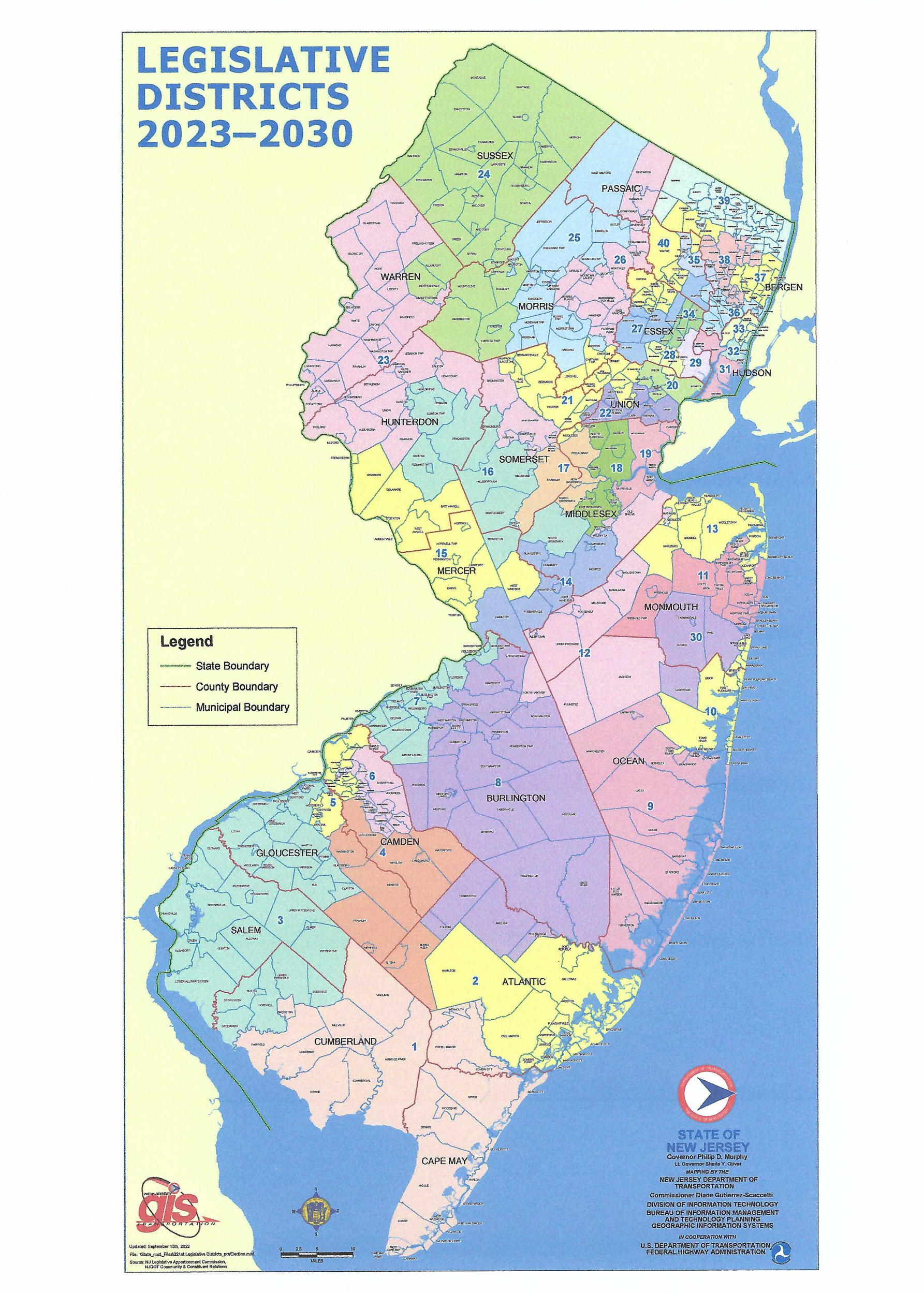
New Jersey’s Geography
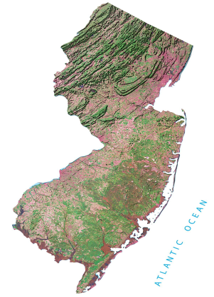
Grade level: Elementary
Objectives: Students will demonstrate their understanding of New Jersey’s geography and its impact on where people live and what they do.
New Jersey Student Learning Standards for Social Studies (2020):
6.1.2.GeoPP.1: Explain the different physical and human characteristics that might make a location a good place to live (e.g., landforms, climate and weather, resource availability).
6.1.2.Geo.SV.1: Use maps to identify physical features (e.g., continents, oceans, rivers, lakes, mountains).
6.1.2.Geo.SV.2: Describe how maps are created for a specific purpose (e.g., school fire-drill map, route from home to school, learning centers in a classroom).
6.1.2.Geo.SV.3: Identify and describe the properties of a variety of maps and globes (e.g., title, legend, cardinal directions, scale, symbols,) and purposes (wayfinding, thematic).
6.1.2.Geo.HE.1: Explain how seasonal weather changes, climate, and other environmental characteristics affect people's lives in a place or region.
6.1.2.Geo.HE.2: Describe how human activities affect the culture and environmental characteristics of places or regions (e.g., transportation, housing, dietary needs).
6.1.2.Geo.HE.3: Identify cultural and environmental characteristics of different regions in New Jersey and the United States.
6.1.2.Geo.HE.4: Investigate the relationship between the physical environment of a place and the economic activities found there
6.1.5.GeoPP.1: Compare and contrast characteristics of regions in the United States based on culture, economics, and physica characteristics to understand the concept of regionalism.
6.1.5.GeoPP.2: Describe how landforms, climate and weather, and availability of resources have impacted where and how people live and work in different regions of New Jersey and the United States.
6.1.5.GeoSV.1: Identify the maps or types of maps most appropriate for specific purposes
6.1.5.GeoSV.2: Use maps to explain the impact of location and place on the relationships between places in New Jersey, the United States and other countries.
6.1.5.GeoSV.4: Use a variety of geographic representations to describe the similarities and differences between places in New Jersey, the United States and the world
Common Core ELA Standards:
RI.4.1 Refer to details and examples in a text when explaining what the text says explicitly and when drawing inferences from the text.
RI.4.3 Explain events, procedures, ideas, or concepts in a historical, scientific, or technical text, including what happened and why, based on specific information in the text.
RI.4.4 Determine the meaning of general academic and domain-specific words or phrases in a text relevant to a grade 4 topic or subject area.
RI.4.7 Interpret information presented visually, orally, or quantitatively (e.g., in charts, graphs, diagrams, time lines, animations, or interactive elements on Web pages) and explain how the information contributes to an understanding of the text in which it appears.
RI.4.9 Integrate information from two texts on the same topic in order to write or speak about the subject knowledgeably.
W.4.7 Conduct short research projects that build knowledge through investigation of different aspects of a topic.
W.4.8 Recall relevant information from experiences or gather relevant information from print and digital sources; take notes and categorize information, and provide a list of sources.
SL.4.2 Determine the main ideas and supporting details of a text read aloud or information presented in diverse media and formats, including visually, quantitatively, and orally.
SL.4.3 Ask and answer questions about information from a speaker, offering appropriate elaboration and detail
Essential Questions:
- What are the natural regions of New Jersey?
- How has the geography and natural resources of the different regions of New Jersey influenced their development?
- Why are some areas of New Jersey more suited for people to live in than others?
Procedures/Activities
1. Where is New Jersey located?
- Show students a map of the United States (Or use Handout 1).
- Point to New Jersey on the Atlantic Ocean.
- What might be the benefits and disadvantages of being next to an ocean?
2. What are the natural regions of New Jersey?
- Show students a physical map of New Jersey at New Jersey Physical Map (Handout 2) and a map of New Jersey’s rivers at Map of New Jersey Lakes, Streams and Rivers (Handout 3)
- Introduce the four natural regions of New Jersey using Handout 4. What are the physical characteristics in each region? How does geography influence what you do?
- Students may individually or in small groups read and take notes about each region from other sources: .
- Appalachian Ridge and Valley in the northwestern part of the state.
- A ridge is a long, narrow chain of mountains.
- The Kittatinny Mountains are a long ridge that crosses much of the western part of this region.
- The Highlands
- This region includes flat-topped ridges and narrow valleys to the east of the Kittatinny Mountains.
- Lake Hopatcong, the state’s largest lake, is in this region, which has many forests and lakes.
- The region is a popular place for hiking and camping.
- Piedmont Region
- Many of New Jersey’s largest cities and rivers are in this region.
- The Hudson River flows along the eastern edge of the region.
- The Delaware River is at the southern end.
- Atlantic Coastal plain
- A plain is a low, flat area.
- This region includes the central and southern part of the state.
- The western part has rich, fertile soil with farms and orchards.
The eastern part, along the coast, is sandy and covered with marshes and pine trees.
3. Where do people live in New Jersey?
- New Jersey is the most densely populated state in the United States. Population density is determined by dividing the number of people living in an area (New Jersey’s population is 8.865 million) by the size of the state (7,417 square miles). Why do you think so many people live in New Jersey?
- The population is not evenly spread out across the state. See a map of NJ’s major cities at Map of New Jersey Cities and Roads (Handout 5). Do you see any connections between New Jersey’s physical geography—where the rivers and mountains are—and where its cities have developed?
- What do urban, suburban, and rural mean?
1) Urban—means a city. The U.S. Census Bureau defined “urban” in 2010 as an area having more than 50,000 people.
2) Suburban—indicates those population clusters that grew up around cities. The U.S. Census Bureau defined “suburban” population clusters in 2010 as areas with populations greater than 2,500 but less than 50,000.
3) Rural--means countryside. We think of farms and New Jersey has plenty of rural areas and farms. This would include all the areas with less than 2,500 people. - Using the Population Density Map (Handout 6) ask students to identify rural, urban and suburban areas of New Jersey, and to compare the Population Density Map with the map of New Jersey’s major cities.
- Identify the town where you live on the map with New Jersey’s major cities. Do you live in an urban, suburban or rural area?
- Why might some areas of New Jersey be more suited for people to live than others?
4. Project: Make a Travel brochure
- Distribute the directions for the New Jersey Regions Project (Handout 7)
- Ask each student to pick one region for their brochure.
- Students will use research links online to create their rough copy. Once finished, they will submit the rough copy for teacher approval before completing the final copy.
- Students will complete their final copies (at home) and share them with the class.
Assessment:
- Use rough copy as formative assessment to monitor progress
- Final project brochure graded using the following project rubric:
Handout 1: Map of the United States
Where is New Jersey?
Handout 2: New Jersey Physical Map
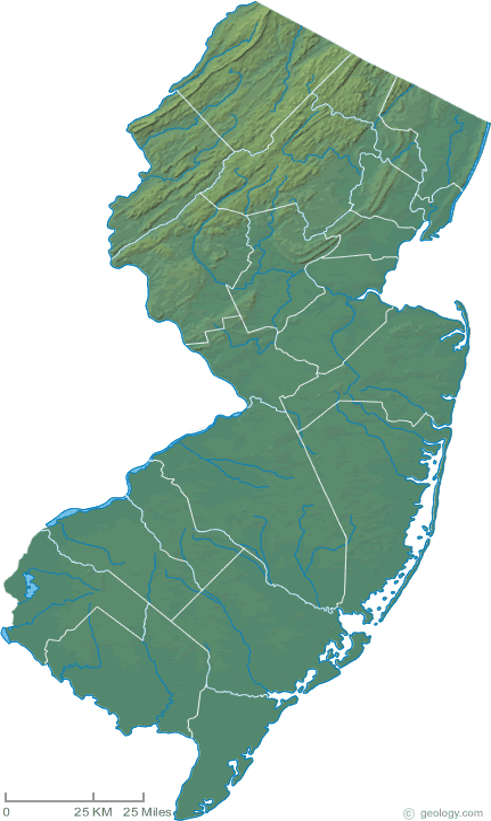
Handout 3: New Jersey Major Rivers and Lakes
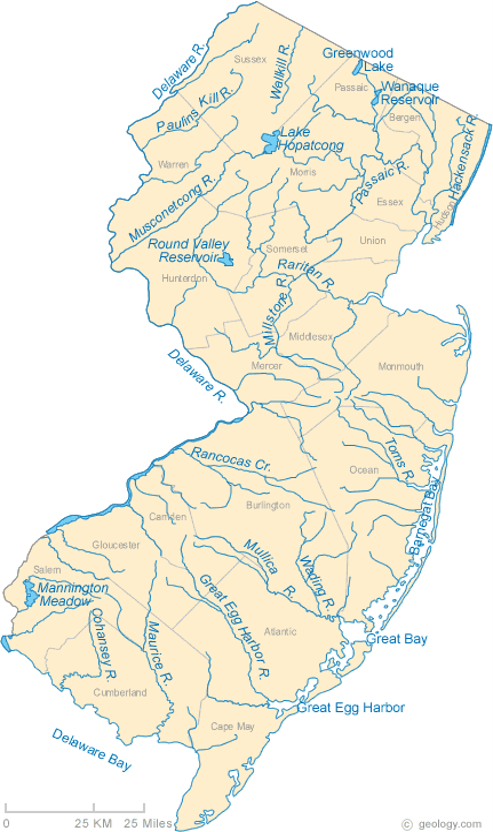
Handout 4: Regions of New Jersey
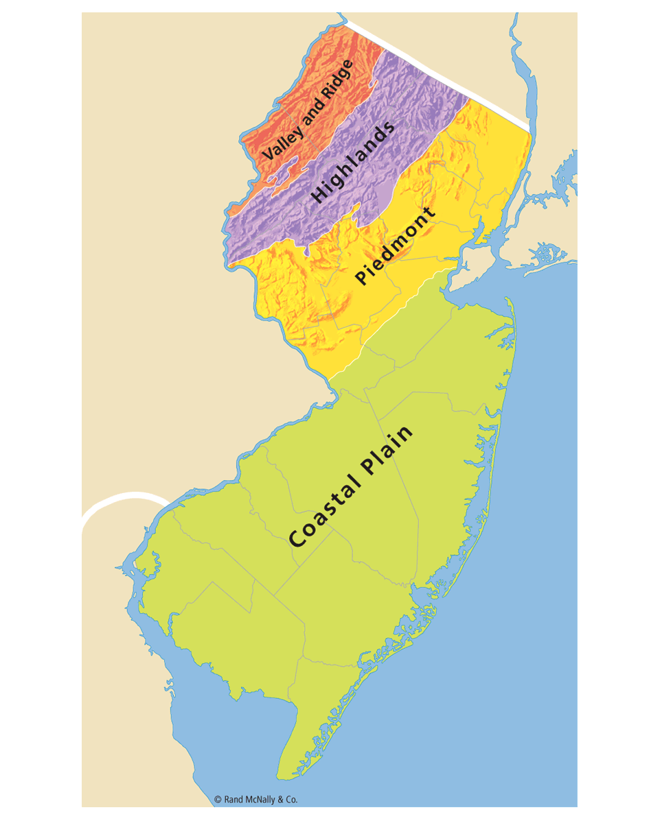
Handout 5: Major New Jersey Cities and Roads
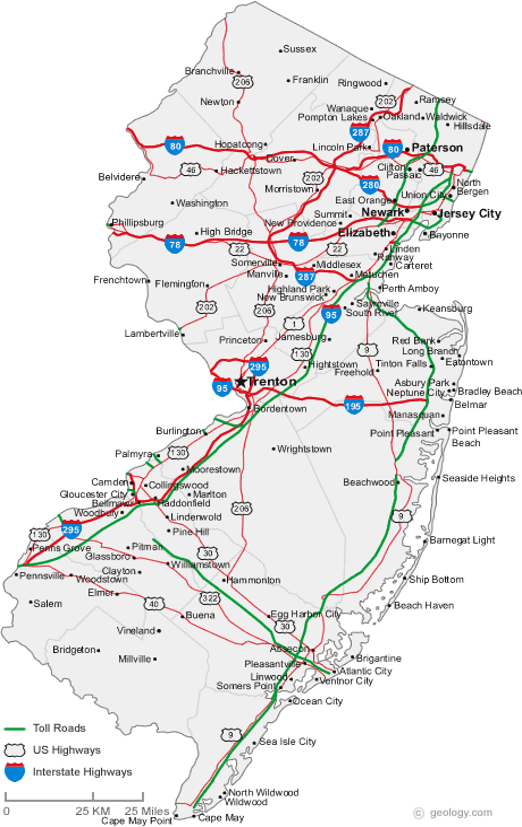
Handout 6: New Jersey Population Density
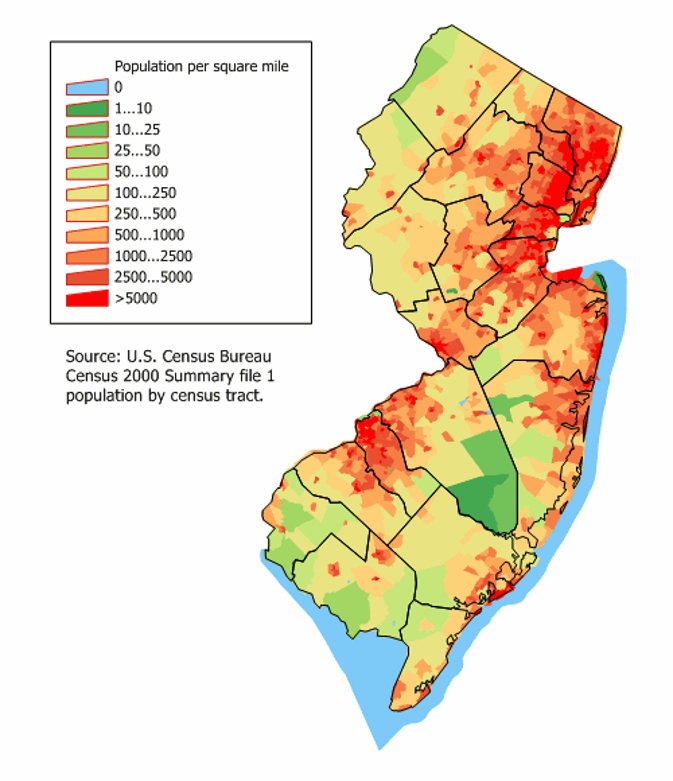
Handout 7
Region Name:
1. Study a NJ region map- where is this region located? Color it on the map to the right: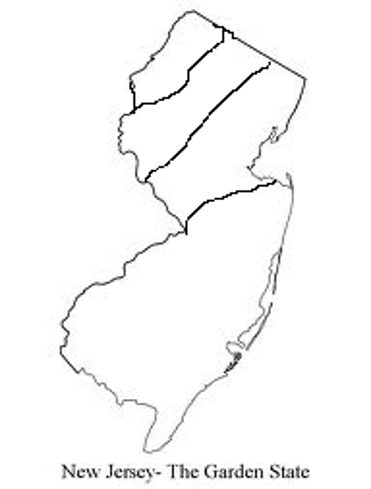
2. Describe the physical land characteristics of this region. (Hint: Are there mountains? Hills? Flat Land? Rivers? Lakes?)
3. What kind of special attractions are in this region? (Hint: Where should visitors go when they are in this region?)
4. What are other special facts about this region?
Name:
Parent Signature:
New Jersey Regions Project!
Choose one of New Jersey’s regions to use to make a travel brochure.
My Region is:
For this project, you may use the information that you collected and recorded in your Region Packet.
You should also use internet sources from my classroom website for more ideas for information and pictures to include. Please have adult supervision when using the internet at home.
FRONT COVER: You must draw and color the region that your brochure is going to be about. You must also write the name of the region on the cover.
INSIDE PAGES: There is a “Free” page for you to write extra information and draw a picture. The other inside pages have specific directions:
- The “nature” page must include a specific place for tourists to go where they can enjoy nature. Include the name of the place and write 1-2 sentences describing details about that place.
- The “special attraction” page must include a specific place for tourists to go that is fun! Include the name of the place and write 1-2 sentences describing details about that place.
- The “information” page must include 1 or 2 interesting facts about the region that the visitor might be interested in. Write 1-2 sentences describing details about the fact/facts.
BACK COVER: Write your name and include any other interesting facts of pictures.
*You should NOT color your rough copy. Your final copy needs to be neat and in color, if you want to print pictures from the computer for your project, you may do so.
For more information about a specific place in your region, see New Jersey's Unique Geology - GSWA; or see Geology of New Jersey
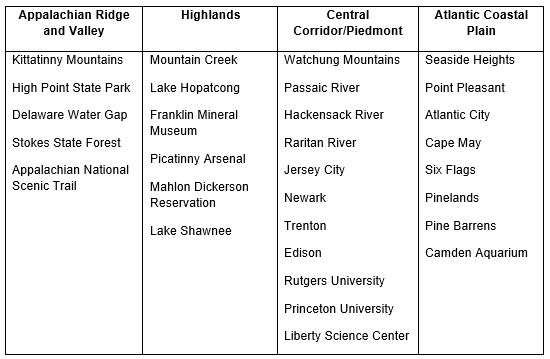
Which New Jersey Region Should YOU Visit?
Appalachian Ridge and Valley: A northern region with lots of mountains and forests.
Highlands: This region has lots of hills and the largest lake in NJ is here!
Central Corridor Piedmont: A region with lots of high, flat, plateaus. Lots of big cities are here also!
Atlantic Coastal Plain: A region with flat lowlands, fertile soil, and lots of beaches!